

Introduction
Aortic dissection is a life-threatening medical emergency that affects the main artery carrying blood from your heart to the rest of your body. Knowing how to recognize the signs, understand the risks, and seek prompt treatment can save lives. In this post, we provide a comprehensive guide to aortic dissection for patients, caregivers, and anyone who wants to know more about this serious condition.
What Is Aortic Dissection?
Defining Aortic Dissection
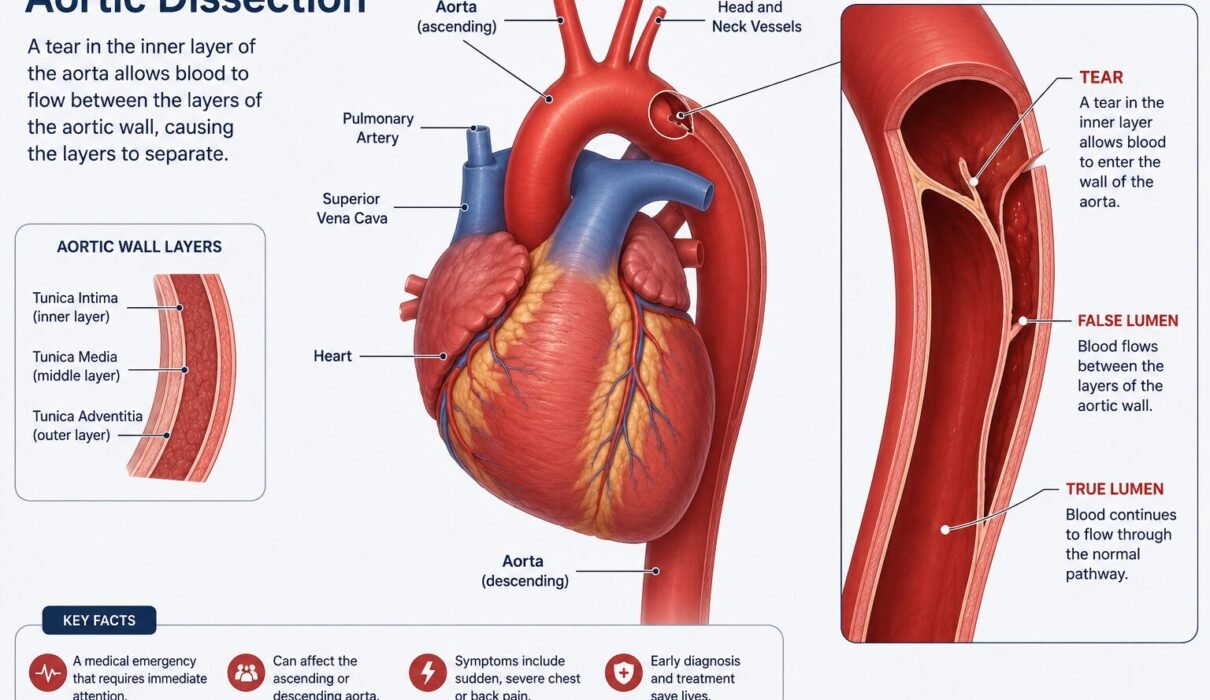
An aortic dissection occurs when there is a tear in the inner layer of the aorta, the body’s largest artery. Blood surges through the tear, causing the inner and middle layers of the aorta to separate (dissect). If this rupture breaks through the outer wall, it can be fatal within minutes.
Aortic Dissection vs. Aneurysm
| Aortic Dissection | Aortic Aneurysm | |
|---|---|---|
| Definition | Tear between layers of aorta wall | Bulge or dilation in artery wall |
| Main Risk | Inner layer tearing, splitting the wall | Rupture or bursting |
| Urgency | Extreme; needs immediate care | Can be chronic but rupture is emergency |
Types of Aortic Dissection
Stanford Classification System
- Type A Aortic Dissection: Involves the ascending aorta (closer to the heart); most dangerous and requires emergency surgery.
- Type B Aortic Dissection: Involves the descending aorta (farther from the heart); may sometimes be managed with medications and close monitoring.
Causes and Risk Factors
Common Causes
- Chronic high blood pressure (hypertension)
- Connective tissue disorders (such as Marfan syndrome or Ehlers-Danlos syndrome)
- Age – more common in people over age 60
- Bicuspid aortic valve or other congenital heart defects
- History of heart surgery or aortic injury
Risk Factors
- Male gender
- Family history of aortic disease
- Smoking
- Use of stimulants such as cocaine or amphetamines
- Pregnancy (rare, but increased risk in late pregnancy)
Signs and Symptoms of Aortic Dissection
Recognizing the Symptoms
Aortic dissection symptoms often appear suddenly and can include:
- Severe, sharp, or tearing chest or upper back pain (often described as sudden and intense)
- Pain that radiates to the neck, jaw, shoulder, or abdomen
- Shortness of breath
- Loss of consciousness (fainting)
- Weak pulse in one arm or thigh compared with the other
- Stroke-like symptoms, including difficulty speaking, vision loss, or paralysis
Why Immediate Action Is Critical
Aortic dissection symptoms can mimic other conditions, such as a heart attack. Do not delay—if you suspect aortic dissection, call emergency services right away.
How Is Aortic Dissection Diagnosed?
Diagnostic Tests
- Computed Tomography (CT) Scan: The most common and rapid imaging test.
- Transesophageal Echocardiogram (TEE): Uses sound waves to get a detailed image of the aorta.
- Magnetic Resonance Angiography (MRA): Useful for those who can’t have a CT scan or need detailed images.
- Chest X-ray: May show a widened aorta but not sufficient for diagnosis.
Treatment Options for Aortic Dissection
Emergency Treatment
Treatment begins the moment aortic dissection is suspected. The choice depends on the dissection type, location, and the patient’s overall health.
- Type A Aortic Dissection: Requires emergency surgery to repair or replace the affected section of the aorta.
- Type B Aortic Dissection: Medications to lower blood pressure and heart rate, alongside close monitoring; surgery if complications arise.
Medications Used
- Beta-blockers to reduce heart rate and blood pressure
- Vasodilators for further blood pressure control
Surgical Procedures
- Open heart surgery to replace damaged aorta sections
- Endovascular repair (inserting a stent-graft via arteries)
Recovery and Long-term Management
What to Expect After Treatment
- Hospital stay length varies, often 1–2 weeks or more
- Life-long medication for blood pressure management
- Routine scans to monitor the aorta
- Ongoing collaboration with cardiologists or vascular specialists
Lifestyle Modifications
- Control high blood pressure
- Stop smoking
- Follow a heart-healthy diet
- Regular, moderate exercise as advised by your doctor
- Routine medical checkups
Complications of Aortic Dissection
Possible Risks
- Aortic rupture (often fatal)
- Organ damage from reduced blood flow
- Stroke
- Heart attack
- Kidney failure
Can Aortic Dissection Be Prevented?
While not all cases can be prevented, lowering your risk factors can make a significant difference.
- Manage blood pressure
- Don’t smoke
- Treat underlying conditions like Marfan syndrome
- Regularly monitor your heart and aorta if at high risk
Living With Aortic Dissection
Patient and Caregiver Tips
- Adhere strictly to prescribed medications
- Communicate openly with your healthcare team
- Recognize warning signs of new chest or back pain
- Seek support groups and share experiences
Key Takeaways
- Aortic dissection is a medical emergency requiring immediate action.
- Symptoms often include sudden, severe chest or back pain.
- Type and location determine the treatment approach.
- Lifelong care, medication, and monitoring are essential after aortic dissection.
- Controlling blood pressure and avoiding smoking may reduce your risk.
Frequently Asked Questions (FAQ)
Who is most at risk for aortic dissection?
People with high blood pressure, connective tissue disorders, those over 60, and males are at highest risk. A family history also increases your risk.
Is aortic dissection hereditary?
Some connective tissue disorders leading to aortic dissection can be inherited. Discuss your family history with your doctor.
How does aortic dissection differ from a heart attack?
While both cause chest pain, aortic dissection involves a tear in the aorta, while a heart attack is caused by blocked heart arteries. The treatments and risks are very different.
Can I exercise after an aortic dissection?
Physical activity is important but should be tailored by your doctor. High-intensity activities or heavy lifting are usually discouraged.
What is the prognosis for aortic dissection?
With rapid treatment, survival rates have improved, especially for Type B dissections. Lifelong care is essential to improving long-term outcomes.
Conclusion
Aortic dissection is a serious, life-threatening condition that demands immediate medical attention. Knowing the warning signs and taking preventive measures, especially if you have risk factors, can save your life or the life of someone you love. Always consult your healthcare provider about any concerns. For more information and support, explore trustworthy resources and connect with healthcare specialists.
Call to Action
If you or a loved one is at risk or has experienced an aortic dissection, stay proactive about your health. Schedule regular checkups, control your blood pressure, and seek medical advice right away if you experience sudden chest or back pain. Share this article to spread awareness and help others recognize the signs of aortic dissection.