

Introduction
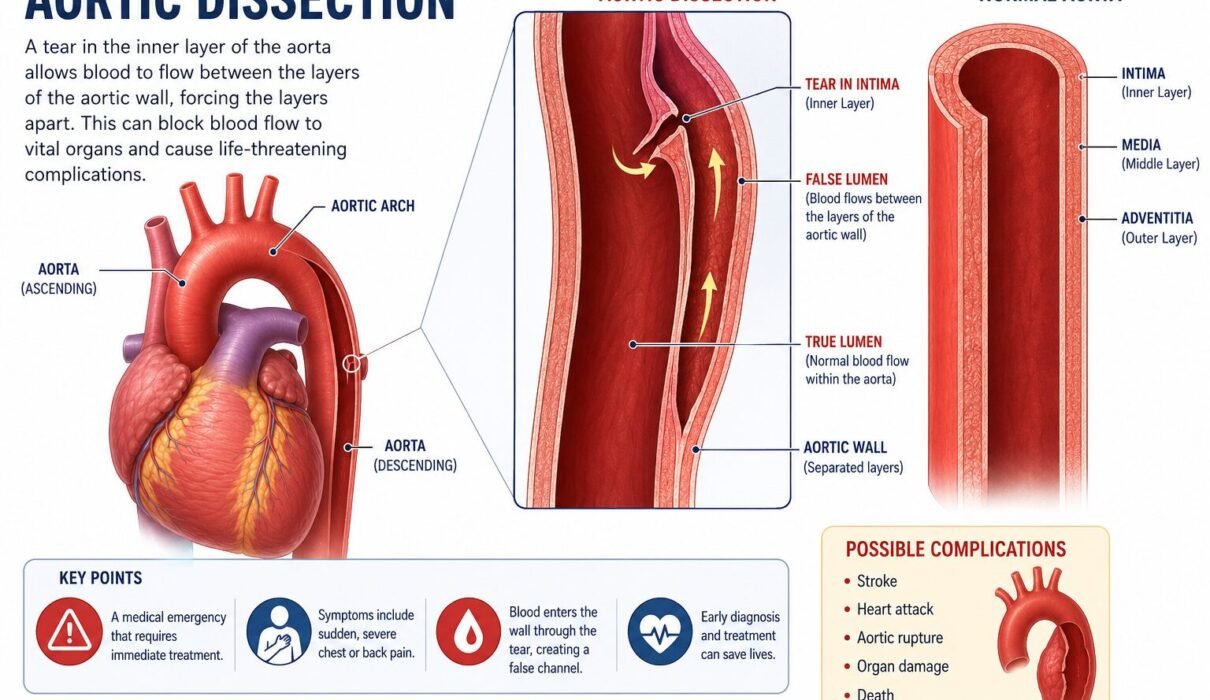
Aortic dissection is a rare but serious medical emergency. When the inner layer of the aorta tears, blood surges between the layers of the vessel, causing the layers to separate or dissect. Recognizing the signs and understanding treatment options can save lives and aid recovery. In this guide, we break down everything you need to know about aortic dissection, from early warning symptoms to the latest treatments and recovery strategies.
What Is Aortic Dissection?
Defining Aortic Dissection
An aortic dissection occurs when the inner lining of the aorta tears, allowing blood to flow between the wall layers of the vessel. The aorta is the main artery carrying oxygen-rich blood from the heart to the rest of the body. Dissections can quickly become life-threatening and require immediate medical intervention.
Types of Aortic Dissection
- Type A Dissection: Involves the ascending aorta and may extend to the arch or descending aorta.
- Type B Dissection: Occurs exclusively in the descending aorta, without involvement of the ascending part.
Symptoms of Aortic Dissection
Common Warning Signs
Symptoms may develop suddenly and dramatically. Some warning signs include:
- Severe chest or upper back pain (may feel like tearing or ripping)
- Pain spreads to neck, jaw, stomach, or hips
- Shortness of breath
- Fainting or sudden weakness
- Stroke-like symptoms such as paralysis or difficulty speaking
- Loss of pulse in arms or legs
When to Seek Emergency Help
If you or someone around you experiences severe chest pain alongside any of the above symptoms, call emergency services immediately. Prompt treatment improves survival chances.
What Causes Aortic Dissection?
Underlying Causes
- High blood pressure (hypertension): The main risk factor, putting strain on the artery walls.
- Connective tissue disorders: Conditions like Marfan syndrome or Ehlers-Danlos syndrome weaken aortic tissue.
- Atherosclerosis: Hardening of the arteries can contribute to weakening.
- Poorly managed cholesterol levels
- Pre-existing aortic aneurysm
- Blunt trauma to the chest (e.g., car accidents)
Genetic Risks
Some families are at higher risk due to genetic mutations. If you have a family history of aortic dissection or related disorders, regular check-ups are essential.
Who Is Most at Risk?
Key Risk Factors
- Men aged 60 or older
- Individuals with high blood pressure
- People with genetic connective tissue disorders
- Smokers
- Individuals with a known aortic aneurysm
- Those with a family history of aortic dissection
How Is Aortic Dissection Diagnosed?
Diagnostic Tests
Speed is crucial. Tests your doctor may use include:
- CT angiography: Fast and highly accurate imaging of the aorta
- Transesophageal echocardiogram (TEE)
- Magnetic resonance angiogram (MRA)
- Chest X-ray (can show widened mediastinum)
- Standard blood pressure and heart monitoring
Comparison Table: CT Angiography vs. MRA vs. TEE
| Test | Speed | Accuracy | Common Use |
|---|---|---|---|
| CT Angiography | Very fast | High | Emergency diagnosis |
| Transesophageal Echo (TEE) | Fast | High | Bedside use |
| Magnetic Resonance Angiogram (MRA) | Slower | High | Detailed, non-emergency cases |
Treatment Options for Aortic Dissection
Immediate Emergency Care
Treating aortic dissection quickly saves lives. The approach depends on the type of dissection and patient status.
Surgical Treatments
- Open Surgery: Replacement or repair of the damaged aorta with a synthetic graft.
- Endovascular Repair: Using a stent graft inserted through a blood vessel in the groin.
Medical Management
- Blood pressure management to prevent further tearing
- Pain management for comfort and to lower heart strain
- Ongoing monitoring and imaging
Recovery After Aortic Dissection
The Immediate Post-Treatment Phase
- Intensive care monitoring
- Regular imaging
- Heart and blood pressure medications
Long-Term Recovery Strategies
- Regular follow-up visits with a cardiologist
- Routine imaging to detect further problems
- Blood pressure control with diet, exercise, and medication
- Lifestyle changes (avoid smoking, alcohol, and extreme exertion)
Living With an Aortic Dissection
Healthy Lifestyle Choices
- Adhere to prescribed medications
- Eat a heart-healthy diet rich in fruits, vegetables, and lean proteins
- Engage in approved physical activity
- Quit smoking and avoid tobacco products
- Monitor blood pressure regularly
Monitoring and Support
Many people live long, fulfilling lives after aortic dissection when proper medical care is maintained. Support groups can provide encouragement and information.
Prevention of Aortic Dissection
Protecting Your Aorta
- Manage blood pressure with lifestyle changes and medications
- Get regular cardiovascular checkups
- Treat underlying cholesterol disorders
- Promptly address chest trauma
- Understand your genetic risks
Key Takeaways
- Aortic dissection is a life-threatening condition that needs urgent care.
- Early recognition of symptoms drastically improves outcomes.
- Long-term management focuses on blood pressure and lifestyle changes.
- Patients can enjoy quality of life with proper medical supervision.
Frequently Asked Questions About Aortic Dissection
What is the survival rate of aortic dissection?
With prompt treatment, many patients survive and recover well. However, untreated dissection has a high fatality rate within the first 48 hours.
Can you prevent aortic dissection?
Managing blood pressure, not smoking, and addressing genetic risks can significantly reduce your chances.
How is aortic dissection different from an aortic aneurysm?
An aneurysm is a bulge in the aorta, while a dissection is a tear. Both are serious, but dissection is more acutely life-threatening.
Is surgery always required for aortic dissection?
No, Type B dissections in stable patients can often be managed with medication alone. Your doctor will recommend the best approach based on your case.
What are the long-term effects after an aortic dissection?
With follow-up, medication, and lifestyle changes, many people return to normal activities; ongoing monitoring remains essential.
Conclusion
Aortic dissection is a critical condition that demands attention, education, and continued care. Recognizing symptoms early, seeking prompt treatment, and following a dedicated recovery plan offer the best chances for positive outcomes. Remember to consult with your healthcare provider about any symptoms or risk factors, and prioritize regular checkups, especially if you have a family or personal history of cardiovascular issues.
Call to Action
If you or a loved one are at risk for aortic dissection, talk to your doctor about personalized screening and prevention. For more information and support, consider reaching out to a local cardiac care group or foundation specializing in aortic disorders.