

Introduction
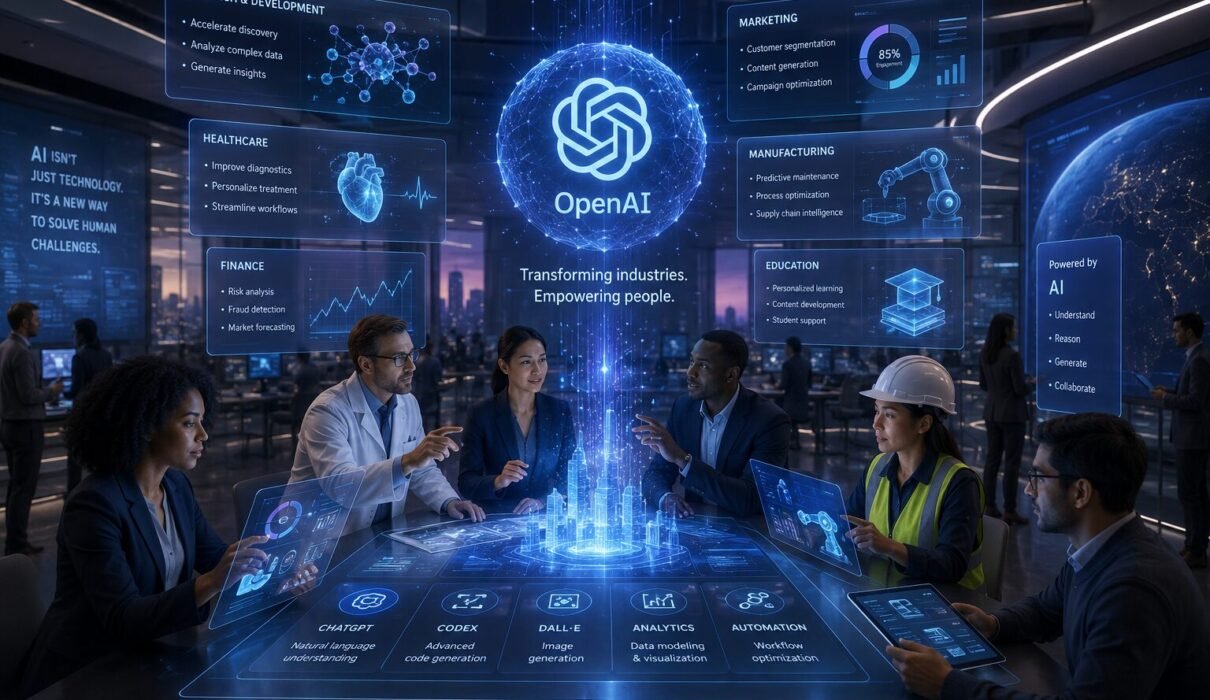
OpenAI has become a driving force in the artificial intelligence landscape, powering practical solutions across industries. The rapid rise of OpenAI applications is changing how companies operate, innovate, and interact with customers. In this guide, we’ll explore how OpenAI technology enhances several business applications and why it matters for both technical and non-technical audiences.
What Are OpenAI Applications?
OpenAI applications refer to tools, products, and platforms developed using OpenAI’s advanced AI models, such as GPT, Codex, and DALL-E. These solutions are designed to streamline workflows, automate tasks, and unlock new possibilities for businesses of all sizes.
Core Technologies Behind OpenAI
- GPT models: Natural language processing that understands and generates human-like text.
- DALL-E: AI-powered image generation from text prompts.
- Codex: Code generation and software automation.
OpenAI Applications in Business Operations
Enhancing Customer Service
Customer support is often the first touchpoint for clients. OpenAI chatbots automate responses, offer personalized assistance, and deliver faster resolutions.
- 24/7 automated support
- Context-aware responses
- Multilingual communication
Streamlining Workflow Automation
Organizations use OpenAI models to automate repetitive tasks, from document drafting to data entry. This improves efficiency and reduces operational costs.
- Email sorting and summarization
- Automated report generation
- Scheduling and reminders
OpenAI in Content Creation and Marketing
Copywriting and Content Drafting
Marketers and content creators leverage OpenAI to generate blog posts, emails, and ad copy. The result? Consistent messaging at scale and improved creativity.
- SEO-optimized drafts
- Social media content ideas
- Personalized marketing campaigns
Advanced Image Generation
DALL-E empowers marketers to create custom visuals for campaigns, enhancing brand storytelling without the cost of traditional graphic design.
OpenAI Applications in Healthcare
Patient Interaction and Support
Healthcare providers use OpenAI-powered virtual assistants for appointment scheduling, answering patient queries, and delivering health information.
Medical Research and Diagnostics
Researchers deploy AI for data analysis, literature review, and even to assist in medical imaging interpretation.
- Faster diagnosis support
- Risk prediction models
- Automated patient education
OpenAI in Financial Services
Fraud Detection and Risk Management
Financial institutions integrate OpenAI applications to detect anomalies and potential fraud in real time, protecting both the business and clients.
Personalized Financial Advice
AI-driven digital advisors analyze customer profiles to offer customized financial guidance.
- Portfolio optimization
- Spending analysis
- Real-time alerts for unusual activity
OpenAI Applications in Education
Personalized Tutoring
OpenAI chatbots act as virtual tutors, adapting lessons to individual learning styles and providing instant feedback.
Automated Grading and Feedback
Educators utilize AI for automated assessment, freeing up time to focus on student engagement.
- Subject-specific quizzes
- Plagiarism detection
- Essay review and scoring
OpenAI and Software Development
Code Generation with Codex
OpenAI’s Codex transforms software engineering by generating code snippets, automating test cases, and suggesting solutions to complex programming challenges.
Bug Detection and Debugging
AI models help detect bugs early in the development process, accelerating deployment and increasing software reliability.
Comparing OpenAI Applications to Traditional Solutions
| Feature | OpenAI Applications | Traditional Solutions |
|---|---|---|
| Speed | Real-time or near instant | Manual, often slow |
| Scalability | Highly scalable | Limited by human resources |
| Customization | Personalized at scale | Manual customization |
| Cost | Lower long-term | Higher recurring |
| Consistency | Uniform quality | Variable depending on personnel |
Key Benefits of OpenAI Applications
- Efficiency: Automate routine and complex processes
- Cost savings: Reduce overhead by minimizing manual effort
- Customer experience: Improve response times and personalization
- Innovation: Enable new business models and products
Challenges and Considerations
Data Privacy
Adopting OpenAI applications demands careful attention to data security and compliance with regulations.
Implementation Complexity
Integrating AI may require time, training, and technical resources, especially for large-scale deployments.
The Future of OpenAI Applications
Emerging Trends
- Voice-enabled OpenAI systems
- Deeper integration with IoT devices
- Cross-industry collaboration for specialized AI tools
Opportunities Ahead
OpenAI will likely play a pivotal role in industries yet to embrace AI, with increased accessibility for businesses of all sizes.
Key Takeaways
- OpenAI applications drive operational efficiency and innovation across industries.
- Integration offers tangible business benefits, but it requires thoughtful planning.
- The future will bring more accessible, customizable AI tools for every sector.
Frequently Asked Questions about OpenAI Applications
How do OpenAI applications differ from standard AI tools?
OpenAI tools leverage state-of-the-art, large-scale language and image models that excel at natural language understanding and generation, enhancing versatility and performance compared to conventional AI solutions.
Is OpenAI technology secure for sensitive industries?
OpenAI invests in robust privacy and security protocols. However, businesses must ensure their implementations comply with industry regulations and safeguard user data appropriately.
Can small businesses benefit from OpenAI applications?
Yes. OpenAI’s API offerings and integrations are flexible, making them accessible for startups and SMEs as well as enterprises.
What skills are needed to implement OpenAI applications?
Basic integration can be achieved with common programming knowledge, though advanced customizations may require AI expertise.
What are the costs associated with OpenAI?
Pricing varies depending on usage and integration level, but many solutions are cost-effective compared to manual alternatives.
Conclusion
OpenAI applications are changing the business landscape, delivering smarter workflows and new value opportunities. As the technology continues to advance, both technical and non-technical audiences can unlock significant value in their operations. By adopting OpenAI, organizations achieve greater efficiency, improved customer experiences, and the ability to innovate at scale.
Ready to Explore OpenAI Applications?
If you’re considering integrating OpenAI technology into your business, start by exploring your use case and consulting with an AI specialist. New possibilities await as AI becomes central to industry transformation.