

Introduction
Aortic dissection is a rare but potentially fatal condition that demands swift recognition and treatment. Despite its seriousness, many people are unaware of what an aortic dissection is, what causes it, or how to recognize the symptoms. This guide aims to empower you with up-to-date information about aortic dissection, helping you understand its risks, know its warning signs, and take proactive steps toward prevention. Knowledge saves lives, and by understanding this condition, you can better protect yourself and those you love.
What Is Aortic Dissection?
Defining Aortic Dissection
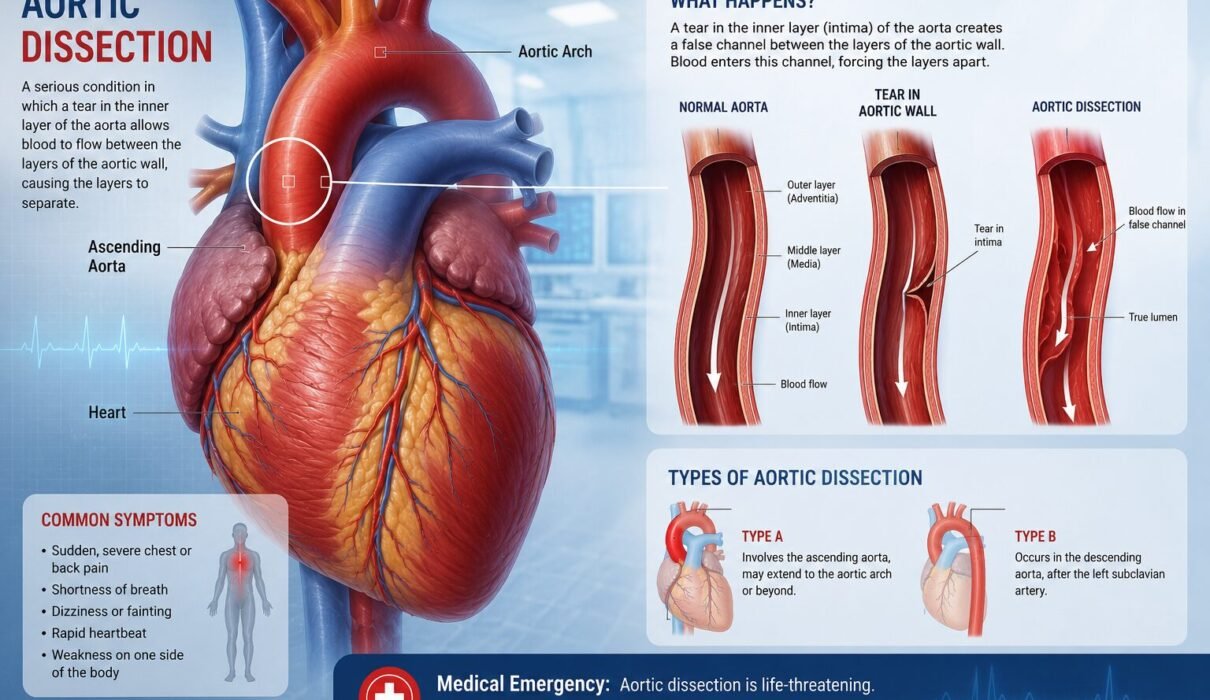
An aortic dissection occurs when a tear develops in the inner layer of the aorta, the primary artery carrying blood from your heart to the rest of your body. As blood surges through this tear, it causes the layers of the aorta to separate, or “dissect.” If the blood-filled channel ruptures through the outside aortic wall, aortic dissection can be deadly.
The Role of the Aorta in the Body
- The aorta is the largest blood vessel in the body.
- It delivers oxygen-rich blood from the heart to all organs.
- A healthy aorta is essential for proper circulation and life.
Types of Aortic Dissection
Stanford System Classification
The Stanford system classifies aortic dissections into two main types, which greatly influences emergency treatment decisions.
- Type A: Involves the ascending aorta (closer to the heart).
- Type B: Involves only the descending aorta (farther from the heart).
Key Differences Table
| Feature | Type A | Type B |
|---|---|---|
| Area Affected | Ascending aorta | Descending aorta only |
| Immediate Threat | Very high | Lower, but still dangerous |
| Treatment | Usually surgery | Often medication, sometimes surgery |
Aortic Dissection Risk Factors
Who Is Most at Risk?
Several factors can increase your chance of experiencing an aortic dissection. Awareness of these risk factors can help you take preventive measures.
- Uncontrolled high blood pressure (hypertension)
- Genetic disorders (Marfan syndrome, Ehlers-Danlos syndrome, bicuspid aortic valve)
- A history of heart surgery or aortic valve surgery
- Trauma or injury to the chest
- Chronic atherosclerosis (hardening of the arteries)
- Cocaine or stimulant use
- Advanced age (especially over 60)
What Causes Aortic Dissection?
Understanding the Triggers
The most common underlying cause of aortic dissection is chronic hypertension, which weakens the aorta’s walls over time. Genetic connective tissue disorders can make aorta walls more fragile and prone to tearing. Occasionally, traumatic injuries—like car accidents—can also trigger a dissection, even in younger people.
Other Contributing Factors
- Atherosclerosis (plaque buildup)
- Pregnancy (rare, but risk increases in late pregnancy)
- Inflammatory or autoimmune conditions
- Severe physical exertion
Symptoms of Aortic Dissection
Recognizing the Warning Signs
Symptoms of aortic dissection often appear suddenly and can be mistaken for other medical emergencies, such as heart attacks. Recognizing the warning signs and acting fast can save lives.
- Sudden, severe chest or upper back pain (described as tearing, ripping, or stabbing)
- Pain spreading to the neck, jaw, or legs
- Shortness of breath
- Fainting or loss of consciousness
- Weak pulse in one arm or thigh compared to the other
- Rapid, weak pulse
- Difficulty speaking, vision loss, or paralysis (if the arteries to the brain are affected)
When To Seek Emergency Help
If you notice sudden severe chest or back pain, or any combination of the symptoms above, call emergency services immediately. Time is critical in treating aortic dissection.
Diagnosing Aortic Dissection
Medical Evaluation
Your healthcare provider will evaluate your symptoms, perform a physical exam, and order urgent imaging tests. Some of the primary diagnostic methods include:
- CT (Computed Tomography) scan: The most common and accurate method for confirming aortic dissection.
- Transesophageal echocardiography (TEE): An ultrasound test performed through the esophagus to visualize the aorta.
- MRI: Offers detailed images but takes longer to perform than a CT scan.
- Chest X-ray: May show a widened mediastinum, but is less definitive.
Quick Diagnosis Saves Lives
The key to surviving an aortic dissection is a rapid diagnosis followed by immediate intervention.
Treatment Options for Aortic Dissection
Initial Emergency Actions
Treatment begins the moment the diagnosis is suspected. Stabilizing the patient—lowering blood pressure and reducing heart rate—is the first priority.
- Immediate blood pressure control
- Pain management
- Oxygen and IV fluids as needed
Surgical vs. Medical Management
- Type A aortic dissection: Usually requires emergency open-heart surgery to repair or replace the affected area of the aorta.
- Type B aortic dissection: May be treated with blood pressure medications and close monitoring. Surgery or endovascular (stent) repair is reserved for complications.
Recovery After Aortic Dissection
Hospital Stay and Rehabilitation
Recovery depends on the type and severity of the dissection. Expect a lengthy hospital stay, followed by cardiac rehabilitation and lifestyle changes to reduce future risk.
- Monitoring vital signs and healing progress
- Long-term medication for blood pressure control
- Physical therapy as needed
Emotional and Mental Health
Many survivors struggle emotionally after a life-threatening event. Support groups and counseling can help patients and families adjust.
Preventing Aortic Dissection
Proactive Measures for Heart Health
- Control high blood pressure—take prescribed medications and monitor at home regularly
- Quit smoking—smoking damages arteries and raises blood pressure
- Eat a heart-healthy diet—focus on vegetables, fruits, lean proteins, and whole grains
- Manage stress—chronic stress can raise blood pressure
- Exercise regularly—but avoid heavy lifting or strenuous exertion if you have aortic risk factors
- Keep regular checkups—especially if you have a family history of aortic conditions
Screening for Genetic Risks
If aortic disease runs in your family, genetic counseling and regular imaging (like echocardiograms or CT scans) may be recommended to detect silent aortic enlargement before a dissection occurs.
Aortic Dissection vs. Heart Attack: Understanding the Difference
Symptom Comparison Table
| Symptom | Aortic Dissection | Heart Attack |
|---|---|---|
| Onset | Sudden, severe | Gradual or sudden |
| Pain location | Chest, back, moves around | Chest, may radiate to arm or jaw |
| Description of pain | Tearing, ripping | Pressure, heaviness |
| Pulse difference between arms | Common | Rare |
| Sweating/shortness of breath | Possible | Common |
While both conditions require emergency treatment, correct diagnosis is essential so the right intervention can be started immediately.
Life After Aortic Dissection: Living With Confidence
Long-Term Monitoring
Survivors must keep regular appointments with heart specialists. Periodic aortic imaging checks for new or progressing problems.
- Take medications as prescribed—especially for blood pressure
- Report any new symptoms right away
- Stay active within safe limits
Support and Resources
Connect with online patient communities to share your journey and learn from others who have survived aortic dissection.
Key Takeaways
- Aortic dissection is a rare, life-threatening emergency—prompt action is critical
- Controlling high blood pressure is the biggest modifiable risk factor
- Know the warning signs: sudden, severe chest or back pain, pulse differences, fainting
- Accurate, rapid diagnosis and treatment dramatically improve survival
- Long-term lifestyle changes and follow-up prevent recurrence
Frequently Asked Questions (FAQ)
Is aortic dissection the same as a heart attack?
No. While both can cause chest pain and require immediate care, aortic dissection involves a tear in the aorta, whereas a heart attack results from blocked heart arteries.
Can you survive an aortic dissection?
Yes, especially with rapid diagnosis and treatment, many people survive and lead fulfilling lives. Delays in treatment greatly reduce the chance of survival.
Can young people have an aortic dissection?
Yes, especially those with genetic conditions or trauma. However, it’s more common in people over 60 with longstanding high blood pressure.
Will I need lifelong medication after aortic dissection?
Most survivors require blood pressure control medication and regular monitoring to reduce future risks.
Should my family members get screened if I had a dissection?
Yes, if there’s suspicion of a genetic risk, family members may benefit from early screening and counseling.
Conclusion
Aortic dissection is a critical medical emergency, but understanding its risk factors and symptoms can make a tremendous difference. Empower yourself and your loved ones by prioritizing regular heart health checks, recognizing the warning signs, and taking swift action in a crisis. If you suspect someone might be experiencing an aortic dissection, don’t hesitate—call for help immediately. Stay informed, take charge of your heart health, and inspire those around you to do the same.
Call to Action
If you have a family history of heart or aortic disease, talk to your healthcare provider about screening. Share this article to raise awareness and help others act quickly if aortic dissection ever strikes. Your knowledge could save a life.