

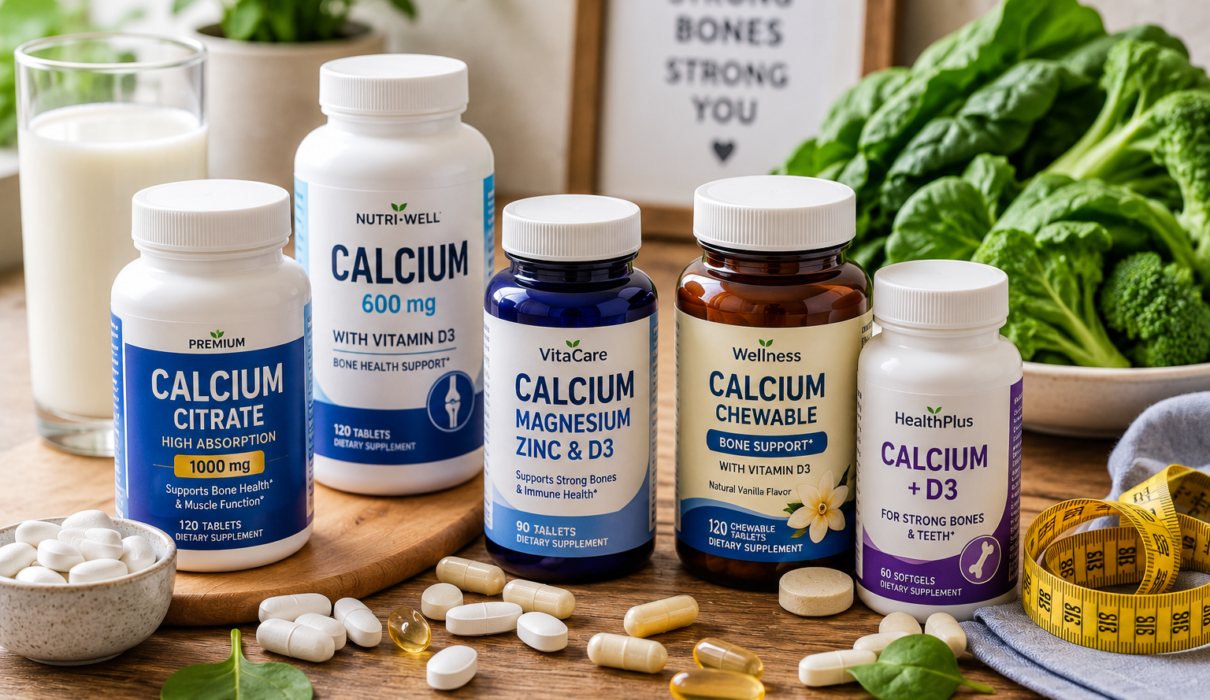
Are you wondering whether calcium supplements are right for you? With so many options, dosages, and opinions, picking the best approach for bone health can feel overwhelming. This guide breaks down the science, compares supplement types, explains safe use, and helps you choose the right calcium supplement with confidence.
Why calcium matters: Bone health and beyond
Calcium is more than a number on a nutrition label. It’s an essential mineral required for strong bones and teeth, muscle function, nerve signaling, and blood clotting. While most of the body’s calcium is stored in bone, daily intake and long-term calcium status influence bone density and fracture risk — especially for older adults and postmenopausal women.
Key roles of calcium in the body
- Supports bone mineralization and bone density
- Enables proper muscle contraction, including the heart
- Facilitates nerve transmission and cellular signaling
- Helps with blood clotting mechanisms
Do you need calcium supplements?
Food-first is the best approach: dairy, fortified plant milks, leafy greens, tofu, legumes, and certain fish (sardines, salmon with bones) are rich in calcium. But supplements are helpful or necessary for many people:
- Older adults, particularly postmenopausal women, who have higher calcium needs and accelerated bone loss
- People with lactose intolerance or milk allergies avoiding dairy
- Vegans or those on restrictive diets with low calcium intake
- Individuals with certain medical conditions that impair absorption (e.g., celiac disease, inflammatory bowel disease)
- People with increased requirements (e.g., some pregnant people) if diet alone is insufficient
Before starting calcium supplements, check your dietary intake and talk with your healthcare provider; they may order bone density tests or blood work to guide recommendations.
Types of calcium supplements: Which one is best?
Not all calcium supplements are created equal. The two most common forms are calcium carbonate and calcium citrate, but others exist. Understanding elemental calcium, absorption characteristics, and practical considerations will help you choose.
Calcium carbonate
- Contains a high percentage of elemental calcium (about 40%) — so lower pill counts for a given dose.
- Best absorbed when taken with food because stomach acid helps dissolve it.
- Often less expensive and widely available (e.g., Tums, generic calcium carbonate supplements).
- May cause more gastrointestinal side effects like bloating or constipation for some people.
Calcium citrate
- Contains less elemental calcium (about 21%), so you may need more pills to reach a target dose.
- Better absorbed on an empty stomach and in people with lower stomach acid (common in older adults or those on acid-reducing medications).
- Tends to be gentler on the stomach and less likely to cause constipation.
- Typically more expensive than calcium carbonate.
Other forms
- Calcium lactate and gluconate: lower elemental calcium, used in specific formulations or IV preparations.
- Micronized or chewable formulations: convenient for those with swallowing difficulties.
Tip: Check the label for “elemental calcium” to know how much usable calcium you’re getting per tablet.
How much calcium do you need?
Recommended dietary allowances (RDAs) vary by age, sex, and life stage. General guidelines:
- Adults 19–50 years: 1,000 mg/day
- Women 51 and older: 1,200 mg/day
- Men 51–70 years: 1,000 mg/day; men 71+ : 1,200 mg/day
- Pregnancy and breastfeeding: 1,000 mg/day (varies by age)
These totals include dietary calcium. Most adults should aim to meet as much as possible through food; supplements fill the gap when diet falls short. Avoid exceeding the tolerable upper intake level (UL) of 2,500 mg/day for adults (or follow your clinician’s advice), since excessive calcium can cause complications.
Maximizing absorption: practical tips
- Split doses: Absorption is best when you take 500–600 mg or less at a time. If you need 1,000–1,200 mg, split into two doses (morning and evening).
- Timing with meals: Take calcium carbonate with meals; calcium citrate can be taken with or without food.
- Vitamin D matters: Vitamin D enhances calcium absorption. Many supplements combine calcium with vitamin D for this reason.
- Avoid high-iron supplements at the same time: Calcium can interfere with iron absorption — separate by a few hours.
- Limit excessive sodium and caffeine: High sodium increases calcium excretion; caffeine modestly increases urinary calcium losses.
Safety, side effects, and drug interactions
Calcium supplements are generally safe when used appropriately, but be aware of possible issues.
Common side effects
- Constipation or bloating (more with calcium carbonate)
- Upset stomach
More serious concerns
- Kidney stones: Some studies show high total calcium intake can increase the risk of certain kidney stones in susceptible individuals. Hydration and dietary balance matter.
- Hypercalcemia: Excessive intake over time can raise blood calcium, leading to weakness, confusion, and abnormal heart rhythms — rare with recommended doses.
- Cardiovascular risk: Research is mixed about whether calcium supplements raise heart disease risk. Most guidelines emphasize food-first approaches and individualized decisions for supplements.
Drug interactions to watch
- Thyroid medications (levothyroxine): Calcium can reduce absorption — separate doses by 4 hours.
- Bisphosphonates (osteoporosis drugs): Take according to instructions; calcium may interfere with absorption timing.
- Certain antibiotics (tetracyclines, fluoroquinolones): Calcium can bind these drugs and reduce effectiveness — stagger dosing.
- Calcium channel blockers and some heart medicines: Discuss timing and risks with your prescriber.
Always tell your healthcare provider and pharmacist about all supplements you take so they can check for interactions.
Choosing the right calcium supplement
Here’s a step-by-step approach to choose wisely:
- Estimate how much calcium you get from food (use a diet tracker or ask a dietitian).
- Decide how many milligrams you need to reach your RDA based on age and sex.
- Pick the type: calcium carbonate if you eat meals with it and want fewer pills; calcium citrate if you have low stomach acid or take acid-reducing meds.
- Check the label for elemental calcium and vitamin D content.
- Prefer reputable brands with third-party testing (USP, NSF, ConsumerLab) when possible.
- Start with the lowest effective dose and monitor for side effects; discuss long-term use with your clinician.
Special situations
Postmenopausal women and bone loss
Osteoporosis risk rises after menopause due to lower estrogen. Adequate calcium combined with vitamin D, weight-bearing exercise, and medications when indicated can slow bone loss. Work with your clinician to tailor a plan.
Vegetarians and vegans
- Plan plant-based sources: fortified plant milks, tofu made with calcium sulfate, collard greens, bok choy, almonds, and seeds.
- Consider supplementation if dietary intake is insufficient, especially for women and older adults.
People on acid-reducing medications
Long-term proton pump inhibitor (PPI) or H2 blocker users may have reduced calcium absorption; calcium citrate is often preferred since it’s less dependent on stomach acid.
Choosing a product: practical checklist
- Look for elemental calcium per serving and count how many pills you’ll need daily.
- Prefer combined vitamin D (800–1,000 IU) if you have low sun exposure or known deficiency.
- Check for third-party verification (USP, NSF, ConsumerLab).
- Consider formulations (chewable, liquid, gummies) for ease — but watch for added sugars in gummies.
- Read customer reviews and consult your pharmacist for brand-specific advice.
FAQ: Quick answers about calcium supplements
Do calcium supplements prevent fractures?
Calcium, especially when combined with vitamin D and weight-bearing exercise, helps maintain bone density and can reduce fracture risk in some populations. However, supplements are one part of a comprehensive bone health strategy.
When is the best time to take calcium?
Calcium carbonate: with meals. Calcium citrate: anytime. Take doses of 500–600 mg or less at a time for optimal absorption.
Can I take calcium with other vitamins?
Yes, calcium is often paired with vitamin D. Avoid taking calcium at the same time as iron or certain antibiotics to prevent absorption issues.
Are calcium supplements safe long-term?
For many people, long-term supplements are safe when used at recommended levels and monitored by a clinician. Discuss personal risks, such as kidney stone history or cardiovascular risk, with your provider.
How do I choose between calcium carbonate and citrate?
Choose carbonate if you want fewer pills and take it with food; choose citrate if you have low stomach acid, take acid-reducing meds, or experience GI side effects with carbonate.
Conclusion: Use supplements smartly, not as a shortcut
Calcium supplements can be a practical, effective way to support bone health when dietary intake falls short. The right choice depends on your diet, age, medications, and digestive health. Prioritize calcium-rich foods, pair supplements with vitamin D if needed, split doses for better absorption, and consult your healthcare provider to tailor a safe plan. With the right approach, calcium supplements can help you build and maintain stronger bones for years to come.