

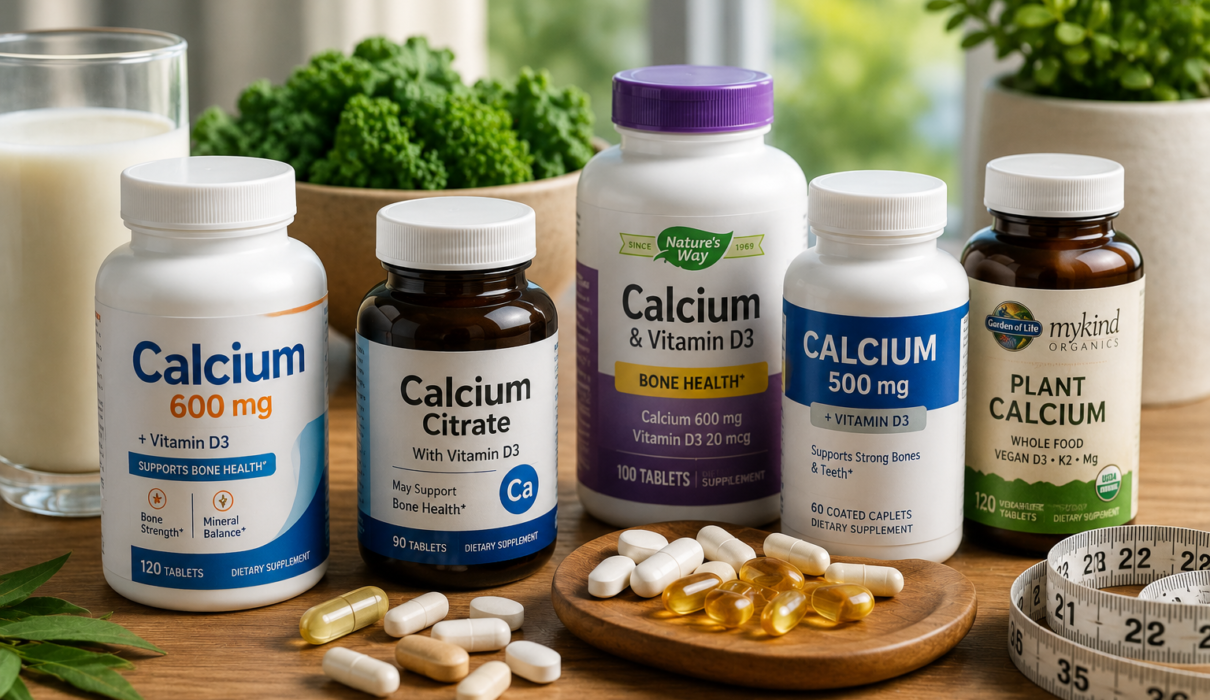
Hook: If you’re confused by bottles labeled calcium carbonate, calcium citrate, elemental calcium, or “bone support” blends—you’re not alone. Calcium supplements can be helpful, but using them correctly matters. This guide cuts through the noise and gives clear, actionable advice so you can choose and use calcium supplements safely and effectively for better bone health.
Why calcium matters: the foundation of bone health
Calcium is the most abundant mineral in the body and a key building block for bones and teeth. Beyond structural support, calcium is essential for nerve signaling, muscle contraction, and blood clotting. Adults gradually lose bone density with age, and inadequate calcium intake can accelerate that loss and increase the risk of osteoporosis and fractures.
How much calcium do you need?
- Adults 19–50 years: 1,000 mg/day
- Women 51+ and men 71+: 1,200 mg/day
- Adolescents (9–18 years): 1,300 mg/day
These numbers refer to total calcium from food plus supplements. Getting calcium from food is preferred, and supplements are for filling gaps.
Types of calcium supplements: know your options
When searching for calcium supplements, you’ll commonly encounter two main types: calcium carbonate and calcium citrate. There are also calcium lactate, calcium gluconate, and combination formulas with vitamin D or magnesium.
Calcium carbonate
- High elemental calcium (about 40%). That means smaller pills for the same dose.
- Best taken with food—stomach acid improves absorption.
- Often less expensive and widely available.
- May cause constipation or gas in some people.
Calcium citrate
- Lower elemental calcium (about 21%), so larger or more pills may be needed.
- Absorbed well with or without food—good for people with low stomach acid or older adults.
- Generally gentler on the stomach.
Other forms and combination products
- Calcium lactate & gluconate: lower elemental calcium, used in specific formulations.
- Calcium + vitamin D: vitamin D boosts calcium absorption and is commonly paired in supplements.
- Bone blends: may include magnesium, vitamin K2, zinc, or boron. These can be helpful but check doses and interactions.
Choosing the best calcium supplement for you
There’s no one-size-fits-all “best calcium supplement.” Consider these factors when choosing:
Key factors to consider
- Dietary intake: How much calcium do you already get from food? Dairy, fortified plant milks, leafy greens, tofu, and certain fish are rich sources.
- Digestive health: If you have low stomach acid or take acid-reducing medications, calcium citrate may be a better choice.
- Tablet size and dosing frequency: Smaller tablets (higher elemental calcium) reduce pill burden. Aim for doses of 500–600 mg calcium at a time for better absorption.
- Cost and quality: Choose reputable brands that third-party test for purity and correct labeling.
- Additional nutrients: If you’re low in vitamin D, a combined calcium + vitamin D supplement can be convenient.
How to take calcium supplements for best results
Proper timing and dosing improve absorption and reduce side effects. Follow these practical tips:
Practical dosing tips
- Split doses: The gut absorbs calcium better in smaller amounts. Take no more than 500–600 mg elemental calcium at a time.
- Timing: Take calcium carbonate with meals. Calcium citrate can be taken with or without food.
- Separate from certain medications: Take calcium at least 2 hours before or 4–6 hours after tetracycline/fluoroquinolone antibiotics, levothyroxine, bisphosphonates, and some heart medications.
- Combine with vitamin D if needed: Vitamin D (cholecalciferol D3) helps the body absorb calcium—many clinicians recommend checking vitamin D status and supplementing if low.
Safety concerns and interactions
While generally safe, calcium supplements have potential downsides and drug interactions to be aware of.
Potential risks
- Kidney stones: Excessive calcium, particularly from supplements, may slightly increase risk of certain kidney stones in susceptible people.
- Cardiovascular concerns: Some observational studies suggested a possible link between high supplemental calcium and heart disease, but evidence is mixed. Current guidance emphasizes meeting recommended intakes without excessive dosing.
- GI symptoms: Constipation and bloating can occur, especially with calcium carbonate.
Drug interactions to watch for
- Antibiotics (tetracyclines, fluoroquinolones): reduce antibiotic absorption—separate dosing by several hours.
- Thyroid medication (levothyroxine): calcium can interfere—take thyroid meds on an empty stomach and calcium several hours later.
- Bisphosphonates for osteoporosis: follow specific timing to avoid interfering with absorption.
Do you need a calcium supplement?
Ask yourself these questions to decide whether to supplement:
- Are you getting enough calcium from food? (Estimate with a dietary review.)
- Do you fall into a higher-risk group for bone loss? (Postmenopausal women, older adults, people on long-term steroids, or with malabsorption.)
- Do you have risk factors for low vitamin D or conditions that impair absorption?
If unsure, a short conversation with your healthcare provider and possibly a dietary assessment or blood tests (vitamin D 25(OH)D) can clarify whether supplements are needed.
Maximizing bone health: more than just calcium
Calcium supplements are one piece of a broader bone-health strategy. Combine supplements with lifestyle measures for the best effect.
Evidence-backed strategies
- Get enough vitamin D: Aim for sufficient vitamin D status (many clinicians target 25(OH)D levels above 20–30 ng/mL).
- Weight-bearing exercise: Walking, jogging, resistance training, and balance exercises help maintain bone density and reduce fall risk.
- Protein intake: Adequate protein supports bone structure and muscle strength.
- Limit smoking and excessive alcohol: Both are linked to poorer bone health.
- Check medications: Some drugs (e.g., long-term steroids) increase bone loss—discuss bone-protection strategies with your clinician.
Choosing a quality supplement: what to look for on the label
When shopping, pay attention to these label clues to ensure safety and value.
- Elemental calcium: Check the amount of elemental calcium per serving (not just the compound weight).
- Form of calcium: Carbonate vs citrate—choose based on your needs.
- Added nutrients: If vitamin D is included, note the IU per serving.
- Third-party testing: Look for USP, NSF, or ConsumerLab verification for purity and potency.
- Expiration date and storage: Freshness matters; store as directed.
Real-world examples and dosing scenarios
Scenario 1: 65-year-old woman with low dietary calcium
Diet provides ~600 mg/day. Recommended total is 1,200 mg/day. Adding a 600 mg elemental calcium supplement (split into two 300 mg doses) plus 800–1000 IU vitamin D/day helps meet targets.
Scenario 2: 55-year-old man on proton pump inhibitors
Low stomach acid reduces absorption of calcium carbonate. Calcium citrate is a better choice and can be taken without regard to meals.
Frequently Asked Questions (FAQ)
Q: Are calcium supplements safe long-term?
A: For most people who need them, calcium supplements are safe when taken at recommended doses and under medical guidance. Aim to meet—but not greatly exceed—recommended daily intakes, and monitor for drug interactions and kidney disease.
Q: Can I get enough calcium from food alone?
A: Many people can reach recommended calcium intakes through diet—dairy, fortified plant milks, canned fish with bones, tofu, and leafy greens are excellent sources. Supplements are for those who don’t meet needs through food.
Q: Does calcium cause kidney stones?
A: Dietary calcium may actually lower kidney stone risk by binding oxalate in the gut. However, very high supplemental calcium in susceptible individuals could increase risk. Work with your clinician if you have a history of kidney stones.
Q: Should I take calcium with vitamin D?
A: Vitamin D helps the body absorb calcium, so combined supplements can be helpful, especially if you’re vitamin D deficient. A blood test can confirm your vitamin D status.
Q: What dose is too much?
A: The tolerable upper intake level (UL) for adults is generally 2,500 mg/day for those 19–50 and 2,000 mg/day for adults 51+. These include calcium from all sources. Avoid chronic intake above the UL unless directed by your provider.
Conclusion: smart, personalized use of calcium supplements
Calcium supplements can be a useful and safe tool to support bone health when chosen and used thoughtfully. Focus on getting as much calcium as possible from food, choose the supplement form that fits your needs (calcium citrate if you have low stomach acid; calcium carbonate with meals if you prefer fewer pills), split doses during the day, and pair with adequate vitamin D, exercise, and a healthy lifestyle. If you have chronic health issues, take multiple medications, or have had fractures, consult your healthcare provider for personalized advice and testing.
Want practical help? Start with a dietary calcium check: track your typical food intake for a few days, compare to recommended targets, and use this guide to decide if a supplement makes sense. When in doubt, talk to a clinician or registered dietitian.
Internal resources you might find helpful
- How Vitamin D Supports Bone Health (link suggestion)
- Top 10 Foods High in Calcium (link suggestion)
- Exercise Plans to Improve Bone Density (link suggestion)
Authoritative sources cited below offer deeper reading on calcium intake, safety, and bone health recommendations.