

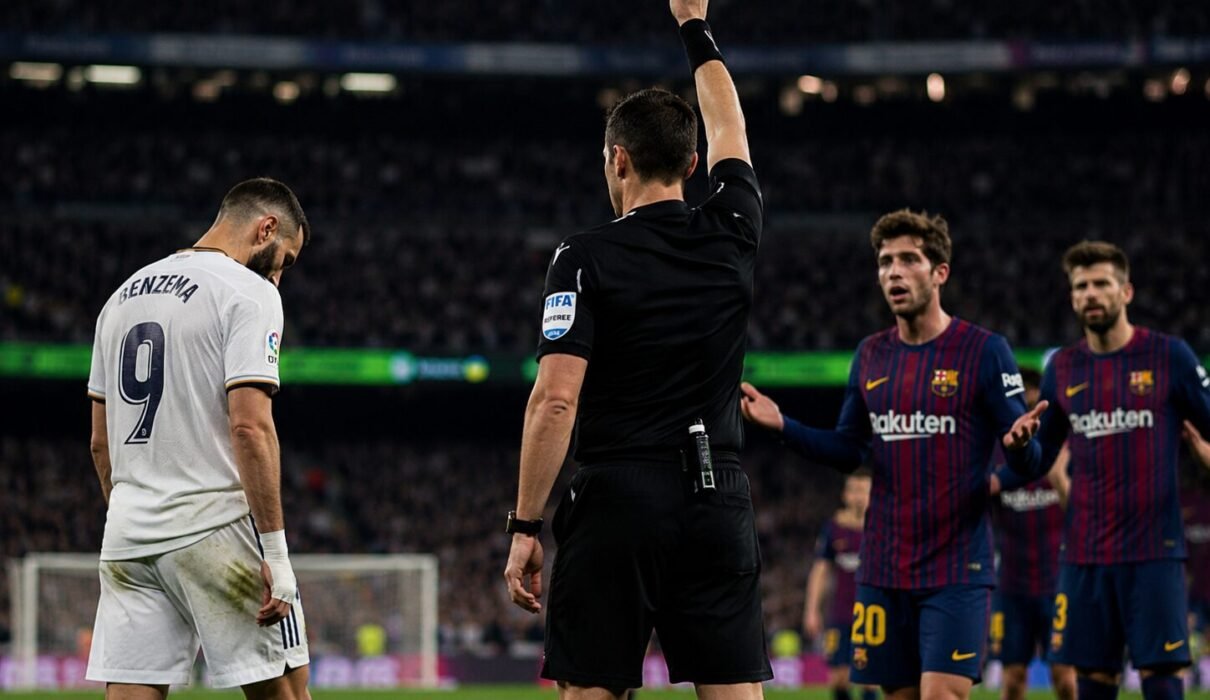
Introduction — The moment a red card changes everything
Few moments in soccer alter a match as quickly as a red card. Whether it’s a studs-up tackle, violent conduct, or denying a clear goal-scoring opportunity, a red card in soccer instantly sends a player off and leaves their team a player short. But what happens next? Beyond the drama on the pitch, there are suspensions, potential fines, and a formal appeals process to consider.
This comprehensive guide explains what a red card means, the immediate consequences during the match, how suspensions are determined, and the steps players and clubs can take to appeal. Read on for practical tips, timelines, and examples from governing bodies so you understand your options and likely outcomes.
What is a red card in soccer?
Definition and common reasons
A red card is issued by the referee to indicate a player has been sent off (dismissed) for serious misconduct or a severe breach of the Laws of the Game. Common reasons include:
- Serious foul play (dangerous tackles)
- Violent conduct (striking, spitting, fighting)
- Denying an obvious goal-scoring opportunity (DOGSO) by an illegal action
- Using offensive, insulting or abusive language/behavior
- Receiving a second yellow card in the same match
Variations of terminology include ‘sending-off’, ‘dismissal’, and ‘straight red’ (as opposed to a red from two yellow cards).
Immediate match consequences
Player-level consequences
- The player must leave the field of play and its technical area immediately.
- The dismissed player cannot be replaced — the team continues with one fewer player for the rest of the match.
- Any ongoing bookings and the player’s disciplinary record are updated.
Team-level consequences
- Numerical disadvantage: the team plays with 10 players (or fewer, if multiple dismissals occur).
- Tactical impact: coaches must adjust formation and substitution strategy.
- Potential in-game disciplinary fallout: more defensive pressure, greater fatigue, higher likelihood of conceding goals.
What happens after the match?
Automatic suspension basics
Immediately after a red card, competition rules typically trigger a suspension. The exact length depends on the nature of the offense and the competition’s disciplinary code—but some general patterns are common:
- Straight red for violent conduct: often an automatic 3-match ban (common in many domestic competitions).
- Denial of obvious goal-scoring opportunity: can result in a 1–3 match suspension depending on severity and intent.
- Serious foul play causing injury: 3+ matches depending on injury and recklessness.
- Offensive/abusive language: suspensions and fines vary; repeated offences escalate punishments.
- Second yellow (two cautions): usually a 1-match suspension, but accumulation rules across competitions may apply.
Note: The International Football Association Board (IFAB) defines offenses in the Laws of the Game, but it’s competition organizers (FIFA, national associations, leagues) that set suspension lengths and appeals procedures.
How suspensions are determined — who decides and what factors matter
Who reviews the red card?
After the match, designated disciplinary bodies review reports. Typical decision-makers include:
- The match referee’s report (primary source of the incident description)
- Competition disciplinary panel or commission
- Independent review panels (in some leagues, e.g., review panels for VAR-era incidents)
Factors that influence suspension length
- Intent: deliberate violent conduct vs reckless challenge
- Severity of contact and injury caused
- Player’s disciplinary history and repeat offenses
- Whether the offence was premeditated or an act of retaliation
- Availability and clarity of video evidence
The appeals process — when and how to challenge a red card
Can you appeal every red card?
Yes and no. Most governing bodies allow an appeal against a red card, but success differs by case. Some competitions limit appeals (for example, they may only accept appeals for mistaken identity or clear wrongful dismissal). The window to lodge an appeal is usually short — commonly 24–72 hours after the match, depending on the competition’s rules.
Steps to mount an effective appeal
- Act quickly: note the appeal deadline and prepare your documentation.
- Gather evidence: full-match and multiple-angle video, VAR footage (if available), and timestamps.
- Collect statements: teammate accounts, coach observations, and medical/forensic reports if injury or contact is disputed.
- File the appeal: submit the appeal form to the competition’s disciplinary body with supporting evidence and a clear argument.
- Attend hearing: the club or player may be called for a hearing where evidence is reviewed and witness questions answered.
- Await the decision: outcomes may uphold, reduce, or overturn the suspension (rarely increased unless new evidence shows escalation).
Common grounds for a successful appeal
- Mistaken identity — the wrong player was sent off.
- Clear and obvious error by the referee contradicted by multiple video angles.
- Evidence that the incident was accidental contact without reckless or violent intent.
- New compelling evidence not available at the time of the match.
Realistic chances and typical outcomes
Appeals succeed in a minority of cases. Many red cards are supported by the referee’s report and the available video evidence. That said, high-profile reversals do happen — especially in competitions with independent review panels set up to correct clear refereeing errors.
Typical outcomes after an appeal:
- Upheld: the red card and suspension remain in place.
- Reduced: the suspension may be shortened (e.g., from 3 matches to 1).
- Overturned: the red card is rescinded and the suspension removed (e.g., mistaken identity confirmed).
Practical tips for players and clubs
- Document everything immediately: collect video timestamps, locker room notes, and witness contacts.
- Know the competition rules: different leagues and cups have different windows and appeal criteria.
- Use legal or disciplinary specialists for complex cases: experienced representation helps.
- Preserve reputation: if the dismissal involved abusive language, public apologies may influence disciplinary mitigation in some jurisdictions.
- Prepare for next matches: manage squad rotation and training to cover the suspension period.
Examples from major governing bodies
IFAB and FIFA
IFAB writes the Laws of the Game that define sending-off offenses. FIFA and national federations implement these laws within competitions and add disciplinary codes that set out suspensions and appeal processes.
UEFA and national associations
UEFA competitions (Champions League, Europa League) and national associations (e.g., The FA in England) have specific disciplinary regulations. For example, straight red cards for violent conduct in many domestic competitions commonly result in a three-match ban, but tournament organizers may adjust after review.
Myths and misconceptions
- Myth: “A red card always means a multi-match ban.” Reality: suspension length depends on the offense and competition rules; some red cards carry one-match bans.
- Myth: “If my team appeals, the club always gets credit.” Reality: appeals can be rejected and rarely reduce suspensions without clear proof.
- Myth: “VAR will always prevent bad red cards.” Reality: VAR reduces errors but doesn’t remove all subjectivity, and some incidents remain debatable.
FAQ — Common questions about a red card in soccer
Q: How long is a suspension after a red card?
A: It varies. Typical bans are 1–3 matches for most straight red offenses, but serious violent conduct or repeat offenses can lead to longer bans. Consult the competition’s disciplinary code for precise rules.
Q: Can a red card be appealed successfully?
A: Yes, especially in cases of mistaken identity or clear and obvious referee error, but evidence must be compelling. Success rates are modest; preparation and strong video proof help.
Q: Does a red card affect international competitions differently?
A: National and international suspensions are governed by the relevant body. A red card in a FIFA match can carry different consequences than a domestic league red. Cross-competition enforcement depends on jurisdiction and the governing bodies involved.
Q: What happens if a player is sent off after the final whistle?
A: Dismissals after the final whistle (e.g., for violent conduct) are still recorded and can trigger suspensions and fines, even though there is no ongoing match advantage to consider.
Q: Can a club be fined as well as the player suspended?
A: Yes. Clubs often face fines for supporters’ behavior, failure to control players, or for incidents that trigger wider disciplinary action.
Conclusion — Know your rules, prepare your evidence
A red card in soccer is more than a dramatic moment: it affects match outcomes, player availability, and often carries lasting disciplinary consequences. The key takeaways are to understand your competition’s rules, act fast if you plan to appeal, and assemble clear video and witness evidence. While appeals succeed in a minority of cases, a well-prepared submission can overturn wrongful dismissals or reduce suspensions.
Whether you’re a player, coach, or fan, understanding the disciplinary framework helps you respond more effectively when the referee reaches for that red card.