

Introduction
In recent years, air quality in NYC has become a major concern for residents, businesses, and city leaders alike. The air we breathe in New York City impacts our health, daily lives, and the future of our urban environment. This guide explores what air quality NYC really means, how it affects your health, and most importantly, actionable strategies you can use to monitor and improve the city’s air.
Understanding Air Quality in NYC
What Does Air Quality Mean?
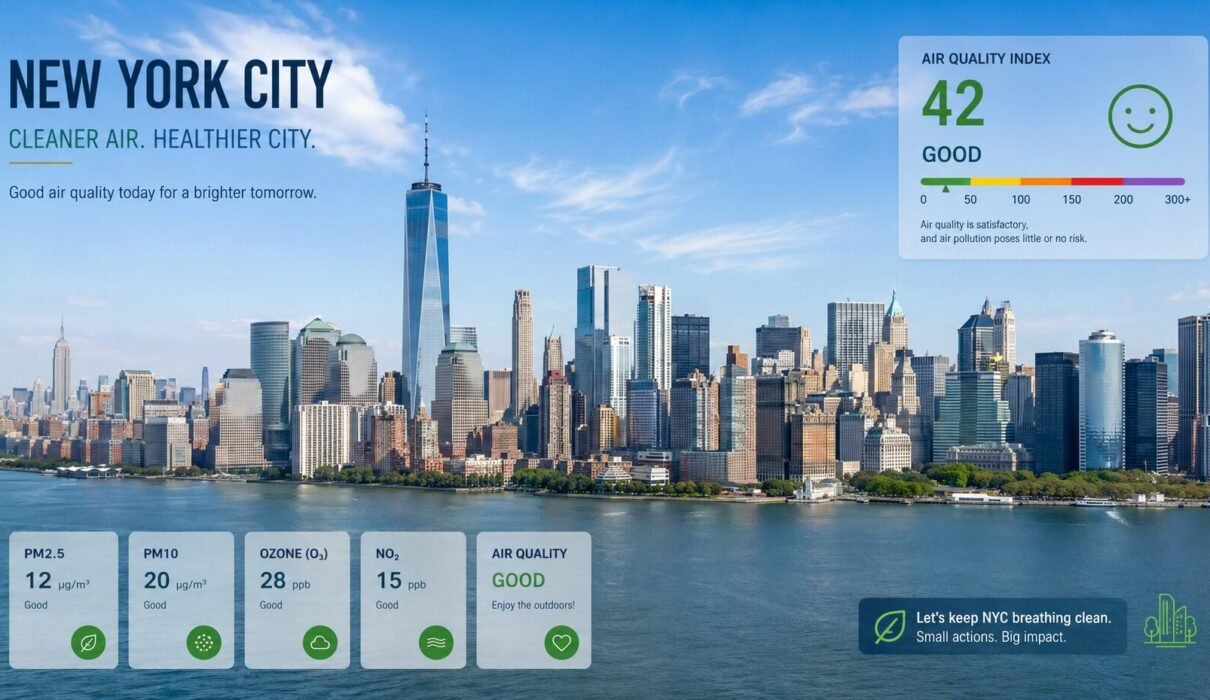
Air quality refers to how clean or polluted the air is. It’s measured using the Air Quality Index (AQI), which takes into account multiple pollutants including particulate matter (PM2.5, PM10), ozone (O3), nitrogen dioxide (NO2), and carbon monoxide (CO). In NYC, these pollutants are mainly produced by vehicles, construction, heating systems, and natural sources.
What Pollutes NYC Air the Most?
- Vehicle Emissions: Cars, trucks, and buses release exhaust that contains nitrogen oxides, particulate matter, and hydrocarbons.
- Building Heating: Many older buildings rely on oil or natural gas boilers, which release fine particles into the air.
- Construction Activity: Demolition and construction stir up dust and release additional pollutants.
- Natural Events: Wildfire smoke from distant areas can impact local air. Seasonal pollen can also affect local air quality.
How Is Air Quality in NYC Measured?
NYC’s Air Quality Monitoring System
The New York State Department of Environmental Conservation (DEC) and the NYC Department of Health and Mental Hygiene operate a network of air quality monitoring stations across the five boroughs. These sites check levels of various pollutants every day, ensuring public access to real-time and historical AQI information.
The Air Quality Index (AQI) Explained
| AQI Level | Air Quality | Health Implications |
|---|---|---|
| 0-50 | Good | Air quality is considered satisfactory. |
| 51-100 | Moderate | Acceptable, but some pollutants may pose a moderate health concern. |
| 101-150 | Unhealthy for Sensitive Groups | People with respiratory or heart conditions may begin to experience health effects. |
| 151-200 | Unhealthy | Everyone may experience health effects; sensitive groups more so. |
| 201-300 | Very Unhealthy | Health warnings of emergency conditions; entire population more likely to be affected. |
Where to Find Real-Time Air Quality Data in NYC
Best Websites and Apps
- NYC Air Quality Portal: Provides live AQI maps and alerts.
- AirNow.gov: EPA-run platform for real-time AQI updates and forecast.
- Plume Labs “Air Report” App: Accurate global and hyperlocal air quality monitoring with helpful alerts.
- IQAir: Offers detailed AQI readings and pollution breakdowns across New York City’s neighborhoods.
How to Read and Interpret Air Quality Reports
- Check the AQI number and color coding (green is good, red is unhealthy).
- Review which pollutants are elevated.
- If unhealthy, follow city recommendations for outdoor activity and mask use.
How Does Poor Air Quality Affect NYC Residents?
Immediate Health Effects
- Increased respiratory issues (asthma, COPD exacerbations)
- Worsening allergy symptoms
- Eye and throat irritation
- Fatigue and headaches
Long Term Health Risks
- Higher risk of cardiovascular disease
- Developmental impacts in children
- Chronic bronchitis and COPD
- Premature death in vulnerable populations
Seasonal Trends: When Is NYC Air Quality Worst?
Common Pollution Peaks
- Summer: High ozone levels due to heat and vehicle emissions.
- Winter: More particulate matter from heating oil and controlled burns.
- Spring: Rise in pollen and dust from construction projects.
- Wildfire Events: Occasionally, smoke from far-off wildfires raises PM2.5 to dangerous levels even in NYC.
Tips for Seasonal Air Quality Awareness
- Subscribe to AQI alerts for your borough.
- Use HEPA-certified air purifiers indoors during high-pollution days.
- Schedule outdoor exercise early in the morning when pollution levels are lower.
Actions NYC Residents Can Take to Improve Air Quality
Everyday Choices That Matter
- Limit car use—opt for public transit, biking, or walking.
- Switch to greener energy sources if possible.
- Report idling vehicles through NYC311.
- Support clean-energy initiatives and local air quality legislation.
- Plant trees or maintain green spaces if you have outdoor access.
Indoor Air Quality Tips
- Reduce use of strong cleaning chemicals.
- Ventilate cooking areas with exhaust fans.
- Use air purifiers with HEPA filters.
- Keep windows closed during citywide air quality advisories.
Citywide Initiatives to Improve NYC Air Quality
Recent and Ongoing Efforts
- The “Clean Heat” program to replace dirty heating oil in large buildings.
- Expansion of NYC’s electric bus fleet and green taxi incentives.
- Increasing urban green spaces and planting more street trees.
- Congestion pricing to reduce vehicle emissions in busy Manhattan zones.
How Residents Can Get Involved
- Join or support local environmental advocacy groups.
- Take part in or organize tree-planting events.
- Provide feedback on proposed city environmental programs.
- Encourage building managers to upgrade heating and ventilation systems.
Products and Tools to Improve NYC Air Quality
Best Air Quality Monitors for Home Use
- IQAir AirVisual Pro: Tracks PM2.5, CO2 and more, syncs with your smartphone.
- Awair Element: Offers real-time alerts and advice for home air improvement.
- Temtop M10: Budget-friendly, portable, and reliable for daily use.
Top-Rated Air Purifiers for NYC Apartments
| Brand / Model | Key Features | Best For |
|---|---|---|
| Levoit Core 300 | HEPA filter, quiet mode | Small rooms, studios |
| Dyson Purifier Cool | HEPA + carbon, cooling fan | Multi-use spaces |
| Blueair 211+ | High CADR, energy-efficient | Large apartments |
Personal Masks and Filters
- Use N95/KN95 masks during high PM2.5 events.
- Check for fit and replace filters regularly.
Key Takeaways: What Every NYC Resident Should Know
- Air quality NYC is variable—always check the daily AQI.
- Long-term exposure to air pollution increases health risks for all ages.
- Small steps—like using public transit—can make a big difference.
- Investing in good home air quality tools protects your health indoors.
- Getting involved in local and citywide initiatives amplifies impact.
Frequently Asked Questions (FAQ)
Is NYC air quality worse than other US cities?
While NYC has made great strides in reducing air pollution, levels can still be higher than rural areas or small cities, especially on hot or high-traffic days. Compared to other major cities, NYC often ranks in the middle depending on the pollutant measured.
What’s the difference between PM2.5 and ozone?
PM2.5 are fine particles that can penetrate deep into lungs and even enter the bloodstream. Ozone is a reactive gas formed during sunny days, which irritates the respiratory tract. Both are harmful, but affect health differently.
How often should I check air quality levels?
If you or a family member have respiratory conditions, check daily. Others should monitor during allergy season, heat waves, or citywide advisories.
Can indoor plants improve air quality?
Plants can help with some toxins, but on their own they are not enough for significant air purification. Use plants alongside air purifiers for best indoor air quality.
Where can I report air quality problems in NYC?
Use the NYC311 system to report illegal idling, smoke, or other air quality concerns. Residents’ reports play a real role in enforcement and improvements.
Conclusion
Air quality NYC is a critical issue affecting everyone from children to seniors. By staying informed, monitoring pollution levels, and adopting better habits, every New Yorker can help clear the air. Your individual actions—big or small—add up to a healthier, more vibrant city for everyone. Stay updated, take part in local initiatives, and invest in your own indoor air safety. Together, we can breathe easier in the city we call home.
Call to Action
Ready to start improving the air quality in NYC? Download a free local AQI app today, subscribe to city alerts, and consider joining a community clean air initiative. Share this guide to help more neighbors breathe easy!