

Introduction
Here’s a hook: whether you’re a musician chasing the perfect beat or a watch shopper drawn to warm, luminous timepieces, the phrase golden tempo likely caught your eye for a reason. The term blends two evocative ideas — the measurable heartbeat of music and the glow of golden design — and it’s increasingly used to describe both tempo practices and a class of watches. In this guide you’ll get a clear definition of golden tempo, explore its musical applications, review the watch styling and mechanics often associated with the name, and get practical buying advice so you can decide if a Golden Tempo watch belongs on your wrist.
What Is Golden Tempo?
At its core, “golden tempo” is a hybrid concept. It isn’t yet a standardized technical term in musicology or horology, but it carries two common meanings:
- Musical meaning: a tempo or feel that is particularly well-suited to a piece of music — often an ideal or “golden” speed where phrasing, groove, and emotional impact align.
- Horological meaning: a marketing and design cue applied to watches that emphasize golden finishes, warm tones, and a classic, rhythmic aesthetic.
Because the phrase sits at the intersection of music and watches, it’s useful for both informational seekers and buyers — which explains the combined informational and commercial search intent behind the keyword “golden tempo.”
Golden Tempo in Music
What musicians mean by golden tempo
Musicians often refer to a “golden tempo” when they find the one speed that makes a piece click. Imagine trying a song at slightly different beats per minute (BPM) until one choice allows the melody to breathe, the rhythm to sit naturally, and the emotional arc to feel right. That sweet spot is what gets called the golden tempo.
How to find the golden tempo
- Use a metronome and sweep BPMs in small increments (e.g., +/- 2–4 BPM) to test feel.
- Record short takes at different tempos and compare them back-to-back.
- Listen for where phrasing feels natural — not rushed or lethargic.
- Consider the song’s context: live performance, studio production, or dance-floor energy all affect the ideal tempo.
Why tempo matters
Tempo determines tension, motion, and perception. Two pieces with the same notes can feel dramatically different at different tempos. The golden tempo isn’t about rules — it’s about outcome: achieving the emotional and physical response you want from listeners.
Golden Tempo as a Watch Concept
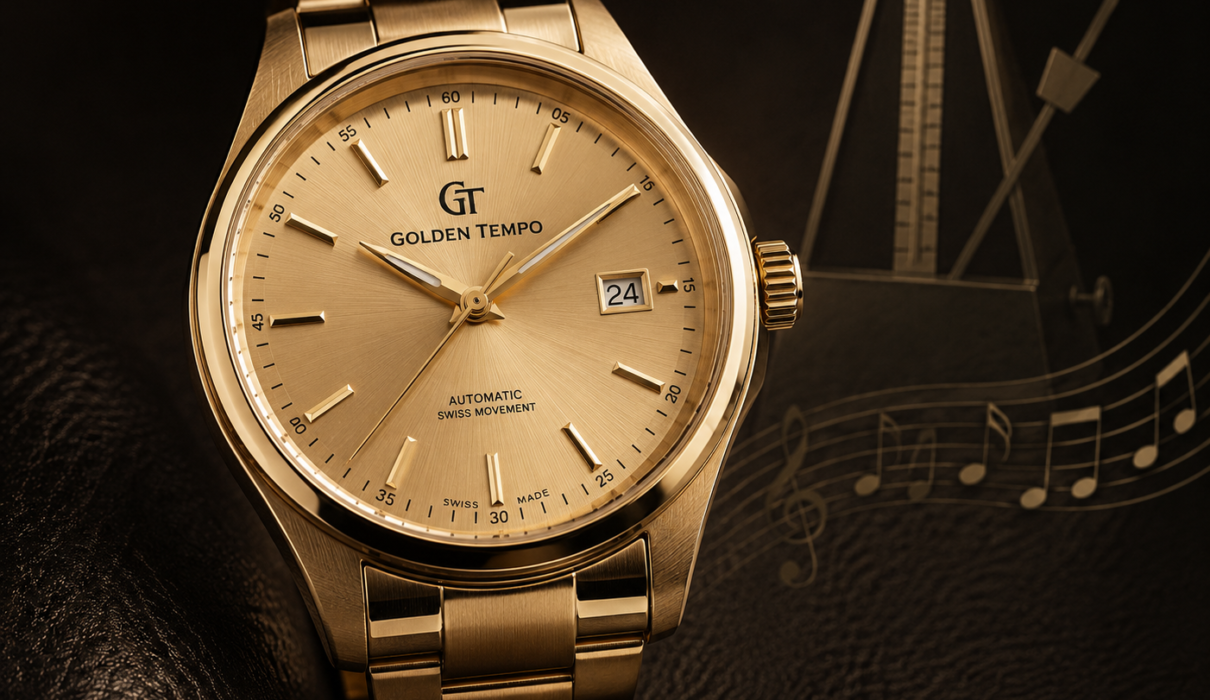
On the horology side, “Golden Tempo” is used informally to describe watches that combine golden aesthetics with a balanced, rhythmic design language. These watches appeal to buyers who want the warmth of gold tones paired with dependable timekeeping.
Design cues to look for
- Case and bracelet finishes: yellow gold plating, PVD gold, or solid gold options.
- Dial treatments: sunburst gold dials, champagne faces, or contrasting subdials for legibility.
- Indices and hands: applied gold indices and dauphine or sword hands that reflect light elegantly.
- Proportions: balanced case sizes (36–40mm for many models) that aim for classical rhythm on the wrist.
Movement and reliability considerations
Whether labeled Golden Tempo or not, a watch should deliver dependable movement:
- Automatic vs quartz: automatic movements offer a mechanical rhythm and prestige, quartz provides accuracy and low maintenance.
- Caliber reputation: look for movements from reputable makers (e.g., ETA, Sellita, Miyota) or in-house calibers validated by reviews.
- Serviceability: gold-plated watches can require specific care; ensure spare parts and servicing are available.
Golden Tempo Watch Review: What to Expect
Below is a breakdown of the typical strengths and limitations you’ll find when evaluating watches marketed as Golden Tempo or matching the aesthetic.
Pros
- Timeless aesthetic: gold tones suit dress and transitional wear.
- Visual warmth: gold dials and cases reflect light in flattering ways.
- Versatility: works with leather straps, bracelets, and mixed-metal outfits.
Cons
- Cost: genuine gold or high-quality PVD can push prices higher.
- Maintenance: gold plating can wear over time; consider solid gold or quality coatings.
- Trend sensitivity: gold can polarize tastes — some prefer modern steel tones.
How to Choose the Right Golden Tempo Watch (Buying Guide)
If you’re shopping for a Golden Tempo-style watch, follow this practical checklist:
Checklist before buying
- Set a budget: determine whether you want solid gold, PVD/gold plating, or gold-colored steel.
- Decide movement preference: automatic for a mechanical rhythm, quartz for precision and convenience.
- Verify brand and warranty: reputable brands often provide better service and longer warranties.
- Check dimensions: 36–40mm cases are classic; larger sizes change the watch’s presence.
- Assess water resistance: even dress watches should offer basic protection (e.g., 30–50m).
- Inspect bracelet/strap quality: solid links vs folded links, leather quality, clasp security.
Where to buy
- Authorized dealers: best for warranty and authenticity.
- Specialty watch retailers: can offer curated selections and expert advice.
- Reputable online platforms: look for return policies and verified reviews.
Golden Tempo vs Other Styles: A Quick Comparison
- Golden Tempo vs All-Steel Sport Watches: Golden Tempo focuses on dressy warmth; steel sport watches prioritize durability and a modern look.
- Golden Tempo vs Two-Tone Watches: Two-tone blends steel and gold and can be more versatile for everyday wear.
- Golden Tempo vs Rose Gold: Rose gold is warmer and more contemporary; yellow gold (often used in Golden Tempo pieces) offers a classic, luminous feel.
Care and Maintenance for Golden-Finish Watches
Golden finishes require some extra attention to preserve their luster:
- Avoid abrasive polishing on plated surfaces—use a soft microfiber cloth.
- Protect from chemicals (perfume, cleaning agents) that can degrade plating.
- Service mechanical movements every 3–7 years depending on manufacturer recommendations.
- Store in a dry, padded watch box to protect finish and prevent scratches.
Buying Tips and Price Expectations
Prices for golden-toned watches vary widely. Here’s a rough guide:
- Under $200: fashion brands with gold plating and quartz movements.
- $200–$1,000: quality quartz or entry-level Swiss movements with better finishing.
- $1,000–$5,000: solid cases, reputable Swiss or Japanese mechanical movements.
- $5,000+: solid gold options, luxury movements, and collectible value.
Always balance finish quality, movement, brand reputation, and after-sales service when making a decision.
Semantic Variations and Related Terms
When researching, you might run into related search terms that help refine results:
- golden tempo watches
- tempo in music
- gold-tone dress watch
- ideal tempo BPM
- metronome and tempo finding
- warm gold watch review
FAQ
Is “golden tempo” an official musical term?
No — it’s not a standardized term in classical music theory. Musicians use it informally to describe an ideal or particularly effective tempo for a piece.
Are Golden Tempo watches real brand models?
While “Golden Tempo” may be used as a model name by some independent makers or as a descriptive phrase by retailers, it’s more commonly a style descriptor referring to gold-toned watches with balanced, classic designs.
How do I find the golden tempo for a song?
Experiment with a metronome, record test takes at slightly different BPMs, and listen for phrasing and emotional impact. Small changes often make the biggest difference.
Is gold plating durable?
Gold plating can be attractive and affordable but will wear over time, especially on bracelets and high-friction areas. PVD gold coatings tend to be more durable, while solid gold is long-lasting but expensive.
Can I wear a gold-tone watch every day?
Yes, but be mindful of wear and tear. Avoid exposing plated finishes to abrasive or chemical conditions regularly, and rotate with other watches if possible.
Conclusion
Golden tempo is a compelling phrase because it unites rhythm and radiance. For musicians, it describes the sweet spot of tempo where music breathes; for watch shoppers, it signals a classically warm and rhythmic design aesthetic. Whether you’re hunting for that perfect BPM or the perfect gold-toned wristwatch, the same principles apply: test, compare, and prioritize authenticity and service. Keep the checklist from this guide handy on your next purchase, and you’ll be more likely to find a timepiece or tempo that feels truly “golden.”