

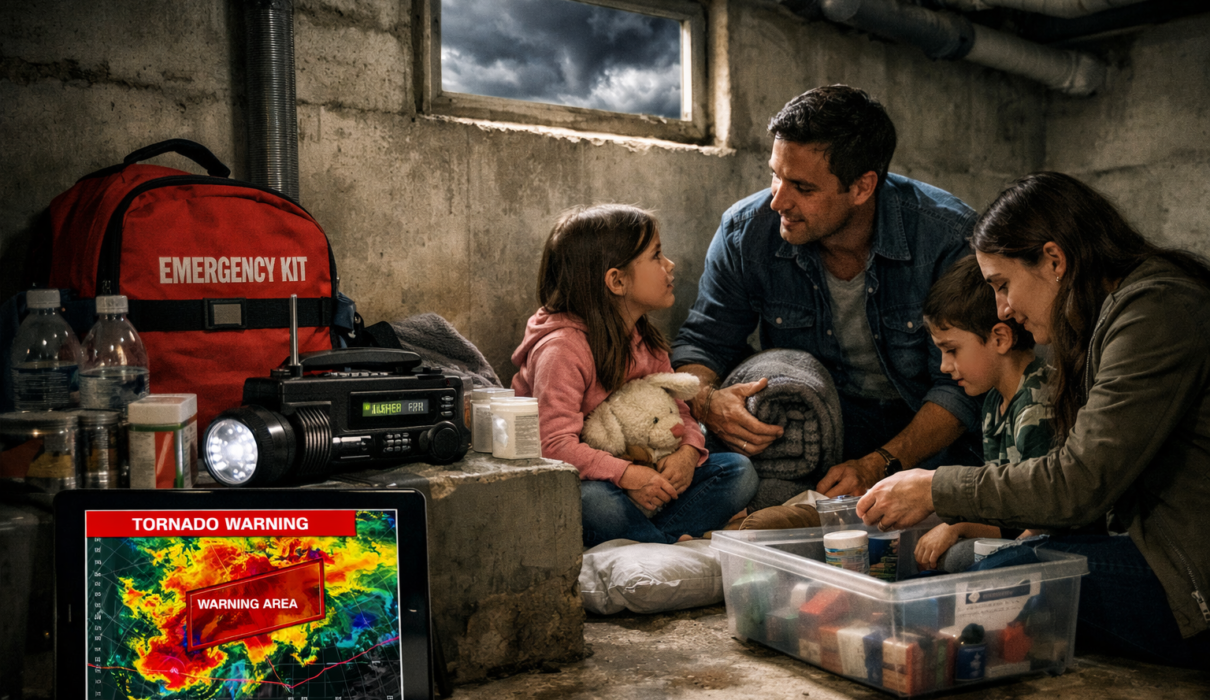
Hook: Imagine you’re scrolling through your phone on a busy afternoon when your weather app flashes an alert. Is it time to move to a safe room, or just keep an eye on the sky? Knowing the difference between a tornado watch vs tornado warning isn’t just trivia — it’s how you decide whether to prepare or take immediate action to protect yourself and your family.
Quick overview: Watch vs Warning
In plain terms:
- Tornado Watch: Conditions are favorable for tornadoes to form. Stay alert and be ready to act.
- Tornado Warning: A tornado has been sighted or indicated by radar. Take cover immediately.
Why the difference matters
The two words carry very different urgency. A watch is a heads-up so you can prepare; a warning means there is imminent danger and immediate protective action is necessary. Getting them mixed up can delay critical response time and put lives at risk.
How watches and warnings are issued
Who issues them?
In the United States, the National Weather Service (NWS) issues both tornado watches and warnings. Local meteorologists and emergency management officials then amplify these messages through TV, radio, sirens, and smartphone alerts.
On what basis?
- Watch: Issued when atmospheric conditions — like wind shear, instability, humidity, and a triggering mechanism — make tornado formation possible over a broad area for several hours.
- Warning: Issued when a tornado is spotted visually by a trained observer or confirmed by Doppler radar signatures (such as a strong rotation or debris signature).
Signs you’ll see for each
Signs of a tornado watch
- Official watch boxes on weather maps and apps.
- Forecasters discuss the potential for severe storms and tornadoes.
- Increasing thunderstorm activity, darkening skies, and large hail reported in the region.
Signs of a tornado warning
- Urgent emergency alerts on phones with specific language like “Take shelter now.”
- Siren activations in many communities.
- Reports of an actual funnel cloud, rotating debris, or a rapid, persistent rotation on radar.
Practical: What to do during a tornado watch vs tornado warning
Below is a practical checklist to follow depending on whether you’re under a watch or a warning. Keep these simple steps in mind — they can save time in a crisis.
During a tornado watch (prepare and stay informed)
- Create or review your family emergency plan so everyone knows where to go and how to communicate.
- Identify the safest place in your home, workplace, or school — a basement or interior room on the lowest floor without windows.
- Gather emergency supplies: flashlight, battery-powered radio, extra batteries, first-aid kit, water, nonperishable food, blankets, and necessary medications.
- Charge phones and keep portable chargers ready.
- Secure outdoor items that could become dangerous projectiles in high winds.
- Monitor weather updates via reliable sources: NWS, local broadcast, NOAA Weather Radio, and trusted weather apps.
During a tornado warning (act immediately)
- Take shelter immediately in the pre-identified safe place — basement or interior room on the lowest floor.
- Protect your head and neck with your arms; use a helmet, heavy blankets, a mattress, or sturdy furniture if available.
- Avoid windows and exterior walls. Do not stay in cars, mobile homes, or outdoors if you can avoid it.
- If you’re driving and a tornado is nearby, try to drive to the closest substantial shelter. If none is available, lie flat in a low area away from vehicles and cover your head.
- Do not leave shelter until the official all-clear is given or until you confirm danger has passed via reliable sources.
Special situations and safety tips
If you live in a mobile or manufactured home
Mobile homes are especially vulnerable. If a tornado warning is issued, move to a prearranged nearby sturdy building, community shelter, or the lowest floor interior room of a friend or family member’s home.
If you are at school, work, or a public venue
- Follow building emergency plans. Schools and many workplaces have designated shelter areas and drills in place.
- Listen to instructions from authorities and staff — do not leave until directed.
If you’re driving
- Do not try to outrun a tornado. Tornadoes can change direction and speed unpredictably.
- If a sturdy shelter is within a short driving distance, go there. Otherwise, buckle up, keep your seat low, and seek out a ditch or low-lying area, but beware of flooding.
Common myths and clarifications
- Myth: Highways are safe because you can drive away. Clarification: Tornadoes can move quickly and unpredictably; driving often increases risk.
- Myth: Open windows equalize pressure and prevent the house from exploding. Clarification: Opening windows does not prevent damage and wastes time better spent seeking shelter.
- Myth: If you see a funnel cloud, you have time to get to safety. Clarification: Tornadoes can descend quickly. Seek shelter as soon as a warning is issued or you observe a dangerous situation.
Preparing ahead: a tornado safety checklist
- Create a communication plan and designate a meeting spot for your family.
- Assemble an emergency kit with 72 hours of essentials, including water (one gallon per person per day), food, medications, important documents, cash, and pet supplies.
- Practice tornado drills monthly during tornado season so everyone knows what to do without thinking.
- Reinforce or identify safe rooms and consider adding storm shutters or window protection for long-term mitigation.
- Sign up for multiple alert methods: wireless emergency alerts (WEA), NOAA Weather Radio, and local alert systems.
How technology helps (and what to watch for)
Modern tools like Doppler radar, automated alerts, and weather apps have improved warning lead times significantly over past decades. However, technological alerts are only effective if you heed them.
- Enable WEA alerts on your smartphone to receive urgent warnings.
- Use a battery-powered NOAA Weather Radio as a backup in case power and cell networks fail.
- Trust official sources and avoid sensationalized social media posts — confirm with NWS or local emergency management.
What to do after the tornado
- Check for injuries and administer first aid as needed; seek medical attention for serious injuries.
- Watch out for hazards: downed power lines, gas leaks, broken glass, and unstable structures.
- Photograph damage for insurance claims and contact your provider promptly.
- Follow local officials for information about shelter, recovery assistance, and road closures.
FAQ
Q: How much time do warnings usually give?
A: Tornado warning lead times vary, but advances in radar and detection typically give several minutes to 20 minutes of lead time. That may be just enough to reach a safe location if you act quickly.
Q: Can a tornado warning cover a large area?
A: Warnings are generally issued for relatively small areas like portions of counties where a tornado is observed or detected. Watches, in contrast, often cover much larger regions.
Q: Are sirens only for tornadoes?
A: No. Sirens are used for various outdoor warnings such as tornadoes, flash floods, or civil emergencies. They are meant to alert people outdoors to seek information immediately through local media or official channels.
Q: What if I hear conflicting information?
A: Always follow the most authoritative and immediate source — NWS warnings, local emergency management, or law enforcement — and use multiple confirmations when possible.
Q: Is it safe to shelter under an overpass?
A: No. Overpasses can actually create dangerous wind tunnels and falling debris hazards. Seek a low, enclosed structure or ditch if no other shelter is available.
Key takeaways
- Remember the phrase: Watch means prepare; warning means take cover now.
- Have a plan, a safe place, and an emergency kit ready before severe weather arrives.
- Use multiple alert methods and trust official sources for timely information.
Conclusion
Understanding the difference between a tornado watch vs tornado warning is one of the simplest and most important things you can do to stay safe during severe weather. Watches give you time to prepare; warnings demand immediate action. Take both seriously: plan ahead, practice your response, and respond without hesitation when a warning arrives. With the right knowledge and preparation, you significantly increase your odds of staying safe when the sky turns dangerous.
For more detailed templates and checklists you can print and keep handy, check out our internal resources like “Storm Safety Checklist” and “Home Emergency Kit Essentials,” and be sure to follow updates from the National Weather Service and FEMA for official guidance.