

Introduction
Have you ever wondered why everyone from central bankers to news anchors talks about CPI so often? In the world of finance and economics, the Consumer Price Index (CPI) is one of the most important indicators. In this in-depth guide, we’ll dive into CPI explained: what it is, how it’s calculated, and why it’s so critical for your financial decisions and the broader economy.
What Is CPI? Understanding the Basics
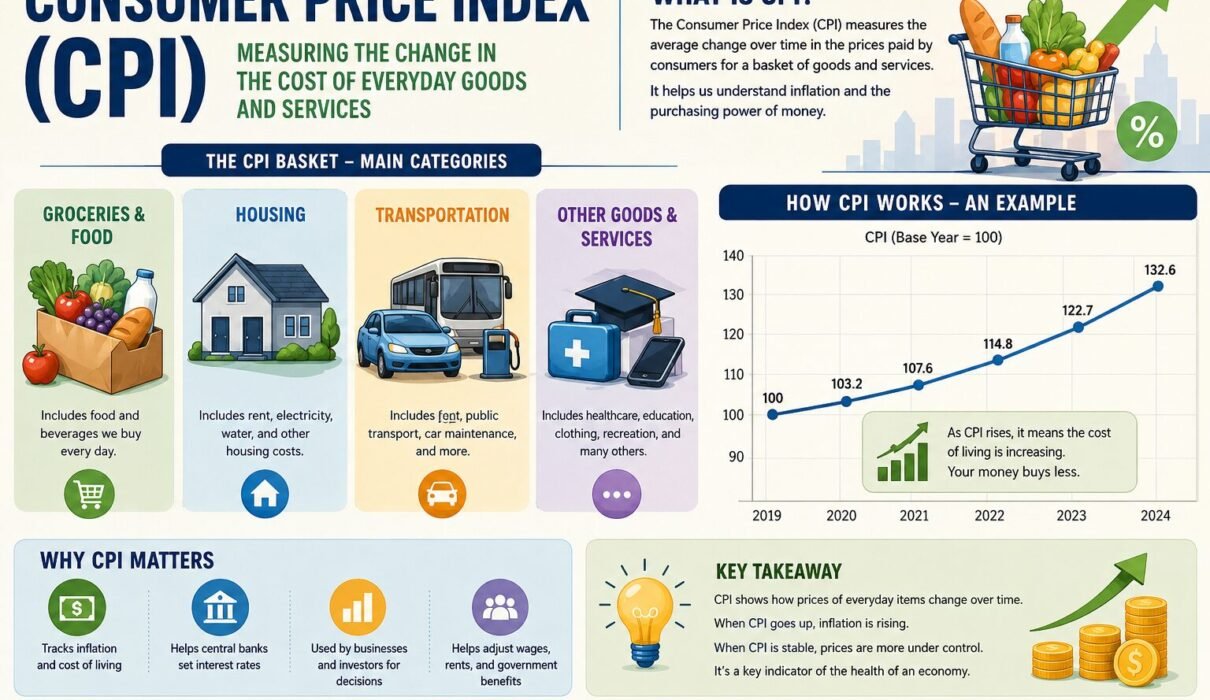
The Consumer Price Index, often referred to by its acronym CPI, tracks changes in prices for a basket of goods and services commonly purchased by households. By measuring price shifts over time, CPI provides key insights into inflation and the cost of living.
CPI Explained in Simple Terms
CPI represents the average change in prices across a selected set of products, such as groceries, clothing, transportation, and housing. It’s designed to indicate how much prices are rising or falling, helping individuals and policymakers understand how inflation affects everyday expenses.
- Measures price changes for everyday goods
- Serves as a benchmark for inflation
- Impacts personal finance and policy decisions
Who Calculates the CPI?
In the United States, the Bureau of Labor Statistics (BLS) calculates and publishes the CPI each month. Other countries have their own governmental agencies responsible for similar measurements.
How Is CPI Calculated?
Understanding how CPI is calculated helps demystify its role in economics and personal finance. The process involves collecting data on thousands of products and analyzing their price changes over time.
Step-by-Step CPI Calculation
- Selection of Basket: Statistical agencies select a set of goods and services representing typical consumer purchases.
- Monthly/Quarterly Data Collection: Prices are gathered for these goods at various outlets nationwide.
- Price Index Construction: Agencies compare current prices to prices from a base year to create an index number.
- Weighting: Each item is weighted based on its importance in the average household’s spending.
Once calculated, the CPI value shows how much prices have increased or decreased since the base period.
Types of CPI
- Headline CPI: Includes all goods and services, such as food and energy.
- Core CPI: Excludes volatile items like food and energy to better reveal underlying inflation trends.
How CPI Affects the Economy
CPI plays a crucial role in shaping economic policy and the business environment. Policymakers use it to gauge inflation and make decisions about interest rates, government benefits, and more.
Monetary Policy Decisions
Central banks like the Federal Reserve track CPI closely. If CPI rises too quickly, interest rates may increase to control inflation. Conversely, slow or negative CPI growth may prompt lower rates to stimulate spending.
Government Programs and Social Security
Social Security and other benefits are often adjusted based on changes in CPI, ensuring that payments keep up with inflation. This process helps protect purchasing power for retirees and beneficiaries.
How CPI Impacts Your Personal Finances
On a day-to-day basis, CPI directly affects your wallet. It can influence everything from wage negotiations to loan rates and household budgeting.
CPI and Wage Growth
When negotiating salaries or pay raises, employers and employees often reference CPI. Raises that match or outpace CPI help maintain living standards by keeping up with rising prices.
CPI and Investments
Many investment products, such as inflation-protected securities, use CPI to adjust payouts. Understanding CPI helps investors make more informed decisions about their portfolios.
- Mortgage interest rates often respond to inflation expectations reflected in CPI.
- Cost-of-living adjustments in various contracts may rely on CPI data.
CPI vs. Other Inflation Measures
CPI is not the only way to measure inflation. Here’s how it compares to other popular metrics:
| Measure | Description | Key Differences |
|---|---|---|
| CPI | Average price change for a fixed basket of goods/services | Focuses on consumer purchases; widely used |
| PPI (Producer Price Index) | Measures changes in prices received by producers | Covers goods at all production stages |
| PCE (Personal Consumption Expenditures Index) | Includes a broader range of expenditures and substitutions | Fed’s preferred inflation measure; more flexible basket |
Which Index Matters Most?
For most consumers, CPI remains the go-to benchmark for tracking changes in the cost of living, but policymakers often consider several indices before making decisions.
Strengths and Limitations of CPI
No index is perfect. CPI has both valuable advantages and notable shortcomings:
- Strengths: Reliable long-term tracking, easy to understand, essential for policy benchmarks
- Limitations: May not account for all spending patterns, doesn’t fully capture new products, may overstate/understate inflation for certain groups
CPI and Substitution Bias
When prices rise for one item, consumers may switch to a cheaper alternative. Traditional CPI methods have struggled to account for this, sometimes misrepresenting real cost changes.
Recent Trends in the Consumer Price Index
Recent years have seen significant changes in CPI, especially due to shifts in supply chains, global events, and policy responses to pandemics and recessions.
Key Factors Driving CPI Changes
- Global supply chain disruptions
- Energy price volatility
- Policy responses (such as interest rate hikes and stimulus packages)
- Labor market changes
Staying informed on CPI trends helps households and investors adjust to evolving economic climates.
How to Use CPI in Everyday Financial Planning
Understanding CPI can help you make better money decisions, from setting a family budget to planning for retirement.
Ways Consumers Use CPI
- Comparing price changes on essential goods over time
- Assessing rental and mortgage rate adjustments
- Making informed investment choices
- Discussing salary increases with employers
Key Takeaways on CPI Explained
- CPI tracks how prices for typical goods and services change over time.
- It’s used to measure inflation and set economic policies.
- CPI influences wages, benefits, loans, investments, and everyday financial decisions.
- Understanding CPI helps both individuals and organizations safeguard financial health.
Frequently Asked Questions About CPI
What does CPI stand for?
CPI stands for Consumer Price Index, which measures changes in average prices paid by consumers.
How often is CPI released?
The U.S. Bureau of Labor Statistics releases CPI data monthly.
Does CPI include housing costs?
Yes, CPI includes various housing expenses, especially rent, but handles home prices differently.
What is the difference between Core CPI and Headline CPI?
Core CPI excludes volatile items like food and energy, offering a clearer view of underlying inflation, while Headline CPI includes all items.
Why is CPI important for investors?
CPI affects bond yields, stock prices, and investment strategies, as it shapes inflation expectations and central bank policy.
Conclusion
The Consumer Price Index is much more than a statistic—it’s a crucial tool for tracking inflation, shaping policy, and guiding your financial choices. By understanding CPI explained, you empower yourself to better manage your money, negotiate smarter, and plan confidently in a changing economic world.
Your Next Steps
Stay informed about upcoming CPI releases and consider how inflation impacts your savings, investments, and budget planning. Sign up for our newsletter to receive regular updates and practical tips on maximizing your financial well-being.