

Introduction
Air quality has become a growing concern worldwide, affecting public health, the environment, and even productivity. With increased urbanization and the rise of pollutants from traffic, industry, and natural sources, monitoring air quality has never been more vital. Air quality monitoring gives us the data we need to understand our environment and take steps to protect our well-being. In this article, you’ll learn why air quality matters, how it’s measured, its health implications, and smart solutions to keep your air fresh and safe.
What Is Air Quality and Why Does It Matter?
Defining Air Quality
Air quality refers to the condition of the air around us—specifically, how clean or polluted it is. It’s determined by the presence of various pollutants, such as particulate matter (PM), nitrogen dioxide (NO₂), ozone (O₃), carbon monoxide (CO), sulfur dioxide (SO₂), and volatile organic compounds (VOCs).
Why Air Quality Is Important
- Health: Poor air quality can trigger respiratory diseases, heart conditions, and other health issues.
- Environment: Air pollution harms plants, animals, and entire ecosystems.
- Economic impact: Pollution-related illnesses mean lost productivity and increased healthcare costs.
Understanding Air Quality Monitoring
What Is Air Quality Monitoring?
Air quality monitoring means tracking and measuring the concentration of pollutants in the air. This helps scientists, governments, businesses, and individuals identify hazards and take informed actions.
How Is Air Quality Monitored?
- Fixed Stations: Government agencies and municipalities install stationary monitoring stations.
- Mobile Units: Vehicles equipped with sensors monitor air quality across different locations.
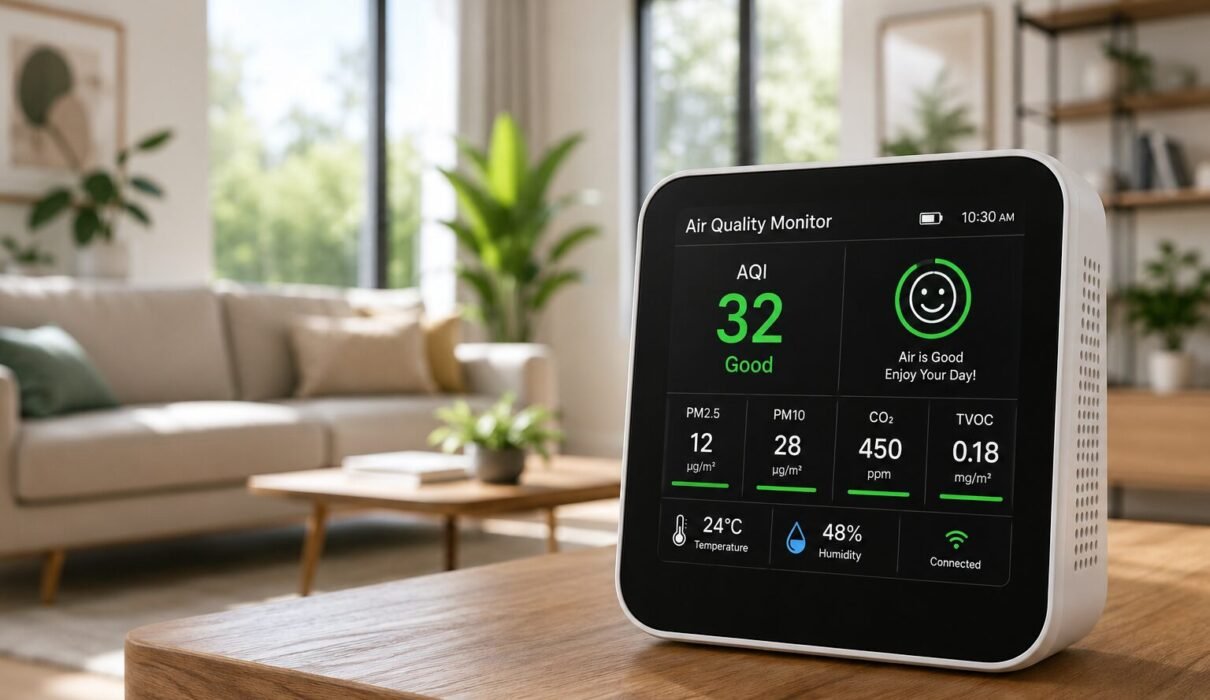
- Personal Monitors: Compact devices provide real-time readings for individuals and families.
Key Air Pollutants Measured
- Particulate Matter (PM2.5 and PM10)
- Nitrogen Dioxide (NO₂)
- Ozone (O₃)
- Sulfur Dioxide (SO₂)
- Carbon Monoxide (CO)
- VOCs
Health Effects of Poor Air Quality
Short-Term Health Impacts
- Itchy eyes, nose, and throat
- Coughing and shortness of breath
- Aggravated asthma symptoms
- Headaches and fatigue
Long-Term Health Risks
- Chronic respiratory diseases
- Heart disease
- Lung cancer
- Premature death
Who Is Most at Risk?
- Children and the elderly
- People with preexisting medical conditions
- Outdoor workers
Methods and Technologies for Air Quality Monitoring
Government and Municipal Monitoring
Many cities rely on fixed monitoring stations managed by environmental agencies. These stations provide accurate and reliable data but may not cover every neighborhood.
Personal Air Quality Monitors
Affordable, portable air quality monitors are now available for personal use. These devices display real-time readings so you can take immediate action to improve the air you breathe.
Smartphone Apps
Several air quality apps provide updates using data from government sensors and satellite imagery. Popular examples include AirVisual and AQICN.
Comparison Table: Fixed vs Personal Air Quality Monitoring
| Feature | Fixed Monitoring Stations | Personal Air Quality Monitors |
|---|---|---|
| Location Coverage | Widespread, but limited points | Targeted, wherever you go |
| Data Accuracy | Highly accurate | Good, but can vary |
| Real-Time Alerts | Often delayed | Instant |
| Cost | High | Affordable |
| Who Uses It? | Agencies, researchers | Individuals, families |
Air Quality Index: What Does It Mean?
Understanding AQI
The Air Quality Index (AQI) is a standard measurement used globally to report daily air quality levels. It transforms complex data on pollutants into an easy-to-understand score ranging from 0 (good) to 500 (hazardous).
AQI Ranges and Their Meanings
- 0-50: Good
- 51-100: Moderate
- 101-150: Unhealthy for sensitive groups
- 151-200: Unhealthy
- 201-300: Very unhealthy
- 301-500: Hazardous
Top Practical Solutions to Improve Air Quality
For Households
- Use air purifiers with HEPA filters
- Ventilate rooms regularly
- Avoid smoking indoors
- Limit use of candles or incense
- Keep houseplants to absorb toxins
For Workplaces
- Install high-quality HVAC systems
- Monitor air quality in large offices
- Encourage regular cleaning and dust control
For Communities
- Promote green spaces and urban trees
- Reduce vehicle emissions
- Support public transportation and cycling
Technological Innovations
- IoT-powered air sensors in smart cities
- Real-time data sharing platforms
- Advanced filtration technologies
Choosing an Air Quality Monitor: What to Look For
Factors to Consider
- Accuracy: Check for sensors validated by third parties.
- Pollutants Measured: The more, the better.
- Real-time Alerts: Instant notifications are a plus.
- Connectivity: Consider Wi-Fi or Bluetooth features for easy access to data.
- Battery Life: Especially important for portable models.
Popular Air Quality Monitors
- Awair Element
- IQAir AirVisual Pro
- Plume Labs Flow 2
Role of Government and Smart Cities in Air Quality Monitoring
Government Initiatives
Many governments are now deploying nationwide air quality monitoring networks and making this data publicly available. These initiatives help with policy-making, urban planning, and crisis management.
Smart Cities
Smart cities use IoT-enabled sensors to monitor local air quality, optimize traffic flow, and manage emissions. This data-driven approach keeps residents informed and guides proactive measures.
How Individuals Can Help Improve Air Quality
Reduce Emissions
- Car pool or use public transportation
- Choose eco-friendly products
- Limit use of fossil fuels
Advocate for Cleaner Air
- Support green policies
- Join local environmental groups
- Stay informed and educate others
Key Takeaways
- Air quality monitoring is essential for protecting health and the environment.
- Both outdoor and indoor air pollution pose serious risks, but solutions exist.
- Personal air quality monitors and apps make it easier than ever to take control.
- Individuals, communities, and governments all play a vital role in ensuring clean air for all.
Frequently Asked Questions (FAQ)
What is air quality monitoring?
Air quality monitoring is the process of measuring and tracking pollutants in the air to assess environmental and health risks.
Why should I monitor air quality at home?
Monitoring indoor air quality helps prevent allergies, asthma attacks, and other chronic conditions by alerting you to harmful pollutants.
How accurate are personal air quality monitors?
Quality monitors are generally reliable, especially those using advanced sensors, but they may have slight variations compared to official stations.
What are the most common air pollutants?
Particulate matter, nitrogen dioxide, ozone, sulfur dioxide, carbon monoxide, and VOCs are among the most common.
Can plants really improve indoor air quality?
Yes, some houseplants can absorb certain toxins, but they work best alongside other solutions like air purifiers and ventilation.
Conclusion
Air quality monitoring is more than just a buzzword—it’s a practical step towards healthier living and a cleaner planet. By understanding the science, recognizing the risks, and using modern tools and smart habits, anyone can make a positive difference. Don’t let unseen threats impact your life. Stay informed, take action, and help create air that everyone can breathe safely.
Take Action: Start Monitoring and Improving Your Air Quality Today!
Ready to take control of your air? Invest in a personal air quality monitor, advocate for clean air policies, and share this guide with your friends and family. Every step counts!