

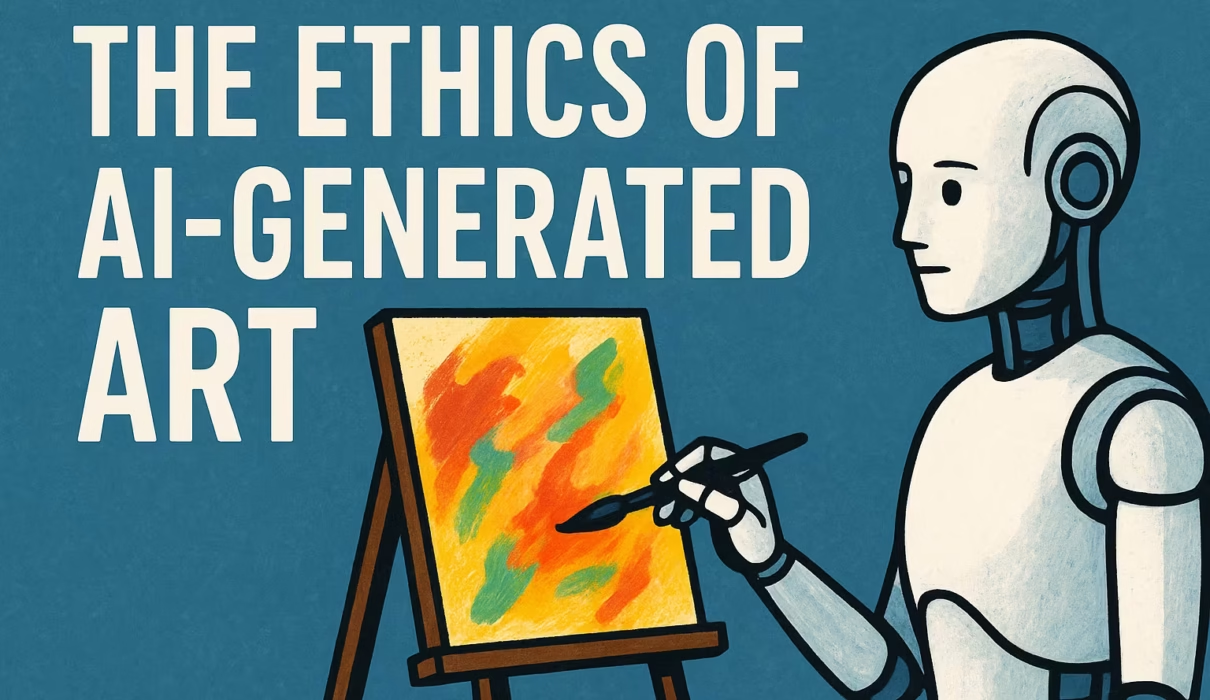
The explosion of sophisticated AI image generators such as Midjourney, DALL-E 3, and Stable Diffusion has thrown the art world into a state of excitement and existential crisis. While these technologies promise a new era of unprecedented creativity, they are built upon the vast, existing library of human creation. This raises one pressing ethical question: Where does inspiration end and intellectual theft begin?
The Core Conflict: Training Data vs. Output
The key ethical question revolves around the very issue of how AI is trained: The models learn by processing billions of images, most of which are copyrighted works that have been scraped from the internet without the explicit consent or compensation of the original creators.
The Pro-AI Argument: Fair Use and Transformation
Those supporting AI art consider this training process to be covered under “fair use” due to the following reasons:
Training is Learning
- They compare the process to a human artist learning by viewing thousands of masterpieces.
- A human artist doesn’t owe royalties every time they draw inspiration from Picasso. The AI’s consumption of data is seen as an analogous form of learning.
Transformation
- AI does not copy or paste; instead, it learns the relationships of elements, for example, “how light hits metal,” or “the style of a 19th-century portrait.”
- It uses those learned patterns to create something entirely new and transformative.
The Artist’s Argument: Uncompensated Labor and Exploitation
Artists, especially those whose individual styles are easily emulated by AI prompts, claim the practice is fundamentally exploitative:
Uncompensated Labor
- The AI models rely on decades of uncompensated creative labor to function.
- By creating derivative works instantly, AI undercuts the market value of the very human artists it learned from.
Style Replication
- When an AI can be prompted to generate an image “in the style of Greg Rutkowski” (a highly publicized example), the output is arguably not just inspired, but a direct attempt to commercially leverage a specific, recognizable aesthetic built over a career.
- For many artists, this feels less like learning and more like intellectual property infringement.
Defining the Lines: Copying vs. Style
The law is still catching up, and ethicists and courts are trying to draw distinctions that separate valid inspiration from theft.
1. The Threshold of Similarity – The “Substantial Similarity” Test
Under traditional copyright, infringement is based on whether a new work is “substantially similar” to the original. For AI, this distinction matters:
- Direct Copying: When the output of the AI is almost identical to an existing artwork, that is considered theft, no matter what process was used.
- Style Parody: When a new, independent work is created by an AI that evokes a style without copying specific elements, it is more likely to be seen as fair use.
The difficulty arises when the AI output resembles many different source images, which is the norm with generative AI.
2. The Commercial Impact
A major factor in copyright decisions is whether the new work harms the market for the original.
- When AI art is sold commercially and directly competes with human artists who work in a similar style, the ethical case for fair use weakens considerably.
- In this scenario, the AI is directly replacing human labor and revenue.
Ethical Solutions and Future Guidelines
Several ethical guidelines are surfacing to help navigate this difficult landscape:
- Opt-in Training Data: The most immediate solution is to require AI companies to only train their models on image libraries where the creators have explicitly opted-in and are fairly compensated for the usage of their work.
- Transparency and Provenance: AI platforms should be transparent regarding sources of training data. Future standards could make “provenance watermarking” mandatory to indicate how an image was generated, thereby differentiating it from the work of a human.
- Digital Rights Management (DRM): New technologies could be developed that tag images with DRM, preventing them from being ingested by AI crawlers without payment or permission.
- Focus on Process, Not Outcome: Ethically, the focus should shift from the output back to the input. If the input is fundamentally stolen or uncompensated, the output, however transformative, carries an ethical burden.
Great is the power of AI-generated art, but if it is to be based on an unsustainable foundation of uncompensated labor, then it devalues the very creativity it seeks to accelerate. Clear ethical boundaries need to be set out if the future for both art and technology is to be ensured.